Peptide Information
How Tissue Repair Peptides Are Studied in Recovery Research
By NUPEPS Research TeamMarch 22, 2026
Peptide science has expanded at a high rate in the last decade. Scientists are also researching the effect of certain amino acid chains on cellular processes, inflammatory responses, and tissue function. Tissue Repair Peptides are one of these discoveries that have gained significant interest in scientific research, with ongoing studies focused on recovery-related processes.
Peptides are small units of amino acids that serve as biological messengers in the body. They are involved in the regulation of numerous physiological functions such as cell communication, immunity, and protein synthesis. Due to this signaling capacity, peptides have become a topic of wide interest for their potential role in supporting tissue function following physical stress.
Some of these compounds have been the subject of scientific interest, like TB-500 , which is studied for its role in cell migration processes. The interaction of these peptides with biological systems continues to be explored to better understand their role in cellular activity.
Understanding the Role of Tissue Repair Peptides
Tissue Repair Peptides are studied for their role in communicating with cells and influencing biological processes related to tissue function. The body also naturally produces signals in response to physical stress, and peptides associates with these signaling pathways.
Researchers have explored multiple mechanisms through which peptides may support recovery-related to processes:
- Cellular signaling: Peptides are studied for their role in signaling pathways involved in cellular activity.
- Collagen processes: Some peptides are associated with collagen-related functions, which are important for connective tissue structure.
- Inflammation response: Certain peptides are researched for their role in inflammation-related processes.
- Tissue structure support: Peptides are associated with maintaining and supporting tissue structure.
Due to their connection with natural biological functions, these molecules are of growing interest in scientific research.
Peptides Studied for Recovery and Cellular Activity
A number of peptides are commonly discussed in scientific literature for their role in tissue-related research.
BPC-157 and Cellular Activity Research
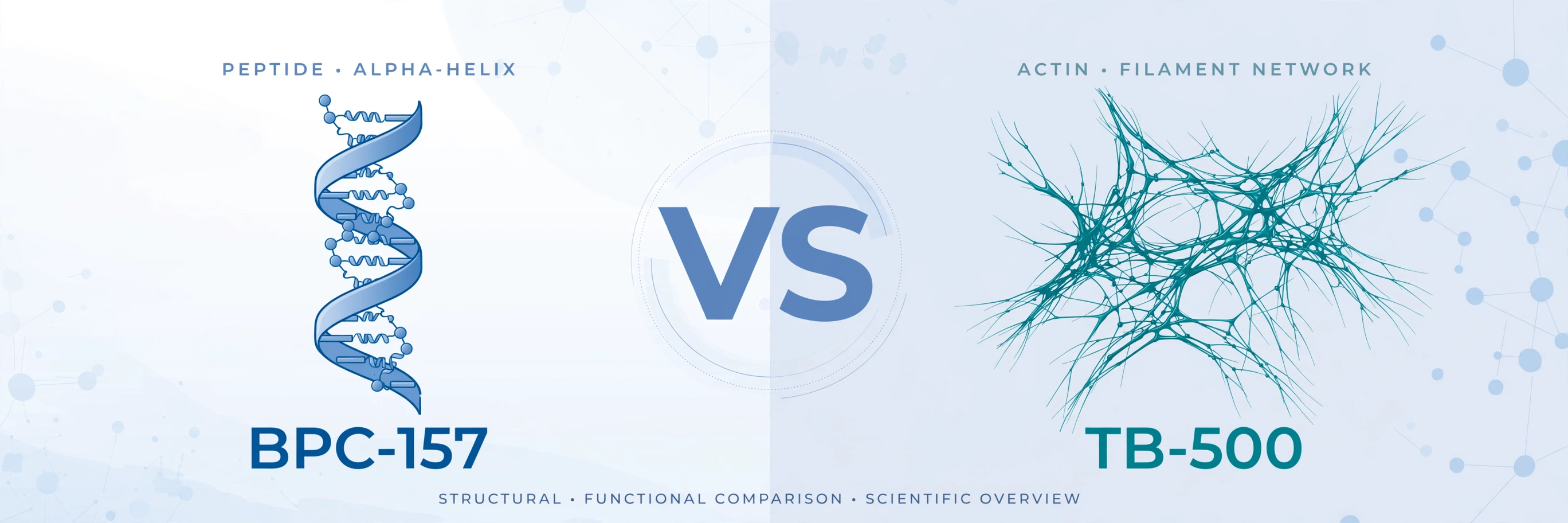
Body Protection Compound BPC-157 is one of the compounds frequently studied in research settings. This peptide is examined for its role in cellular activity, particularly in muscles, tendons, and ligaments.
Researchers exploring tissue repair peptides often study how this compound interacts with biological systems involved in tissue structure and cellular processes.
Thymosin Beta-4 and Tissue Function
TB-500, the synthetic fragment of thymosin beta-4, is another peptide of interest studied for its role in cellular movement and structural tissue processes in laboratory research. Researchers often examine how this peptide interacts with proteins involved in cellular function.
These peptides demonstrate how targeted research continues to expand understanding of biological processes.
How Tissue Repair Peptides Influence Recovery Mechanisms
Scientific investigations into peptides focus on how these compounds interact with different biological systems. Peptides do not act as a single solution and are typically studied within complex biological pathways.
Key processes studied by researchers include:
Cellular Communication
Peptides are associated with signaling processes that involve immune cells as well as other components related to tissue structure.
Collagen and Structural Support
Connective tissues rely on collagen. Certain peptides are studied for their association with collagen-related processes that support tissue structure.
Inflammation Response
Inflammation is a natural biological process. Research explores how peptides associates with inflammation-related responses.
Researchers often emphasize the importance of balance in these biological processes when studying tissue-related mechanisms.
The Expanding Role of Peptide Research
Peptide science continues to expand beyond recovery-related studies. Researchers are exploring how peptides interact with processes related to skin, immune function, and metabolism.
For example, dermatological research includes cosmetic peptides studied for their role in skin appearance and collagen-related functions.
As peptide science evolves, ongoing research continues to explore how these molecules interact within biological systems.
Final Thoughts
Research on Tissue Repair Peptides continues to grow as scientists explore their role in biological processes related to tissue function. Peptides are studied for their involvement in cellular signaling, collagen-related processes, and inflammation responses.
Ongoing research in academic and laboratory settings continues to expand scientific understanding of peptides and their interaction with the body.
Tissue-protection research also extends beyond the classic repair peptides: ARA-290 (cibinetide), an erythropoietin-derived peptide, is studied for its activity at the innate repair receptor and its role in inflammation-related tissue damage models.
What are peptides for recovery?
Recovery-related peptides are short amino acid chains studied for their role in cellular activity and processes associated with tissue function following physical stress.
What is peptide research for inflammation and recovery?
This area of research examines how peptides interact with inflammation-related processes and cellular functions. Scientists study how these compounds associate with biological responses.
What is the best peptide for muscle recovery?
Various peptides are studied in research settings for their role in muscle-related processes. These include different compounds examined for their interaction with cellular activity and tissue structure.
Frequently asked questions
What are tissue repair peptides and why do researchers study them?
According to the article, researchers study tissue repair peptides as short amino acid chains that act as biological messengers involved in cell communication. Scientists examine their association with cellular signaling, collagen-related processes, inflammation responses, and tissue structure following physical stress, rather than viewing any single peptide as a standalone solution in laboratory research.
How is BPC-157 described in tissue repair research in the article?
The article describes BPC-157 as a compound frequently examined in research settings for its interaction with cellular activity, particularly in studies involving muscles, tendons, and ligaments. Researchers explore how it associates with biological systems involved in tissue structure and cellular processes, as part of broader investigations into recovery-related mechanisms in the laboratory.
What does the article say about TB-500 and cell migration research?
The article describes TB-500, also called Thymosin Beta-4, as a peptide studied for its role in cellular movement and structural tissue processes. Researchers examine how it interacts with proteins involved in cellular function and cell migration, and how those interactions may help explain signaling pathways associated with tissue function in scientific studies.
All products are intended strictly for laboratory research and in-vitro use only. Not for human or veterinary consumption, diagnostic, or therapeutic use. Products are not drugs, foods, cosmetics, or dietary supplements and may not be misbranded, misused, or mislabeled.
Related research products
Compounds discussed in this guide, available for laboratory research.