Sign up to our newsletter for 20% OFF
We use essential cookies to keep the store running. With your permission, we'll also use analytics and marketing cookies to understand visits and improve how we reach researchers. You can change your mind anytime via “Cookie settings” in the footer.
Dermal-matrix and formulation peptides for topical and cosmetic studies. Every batch verified for identity and 99%+ purity by HPLC and mass spectrometry.
3 products
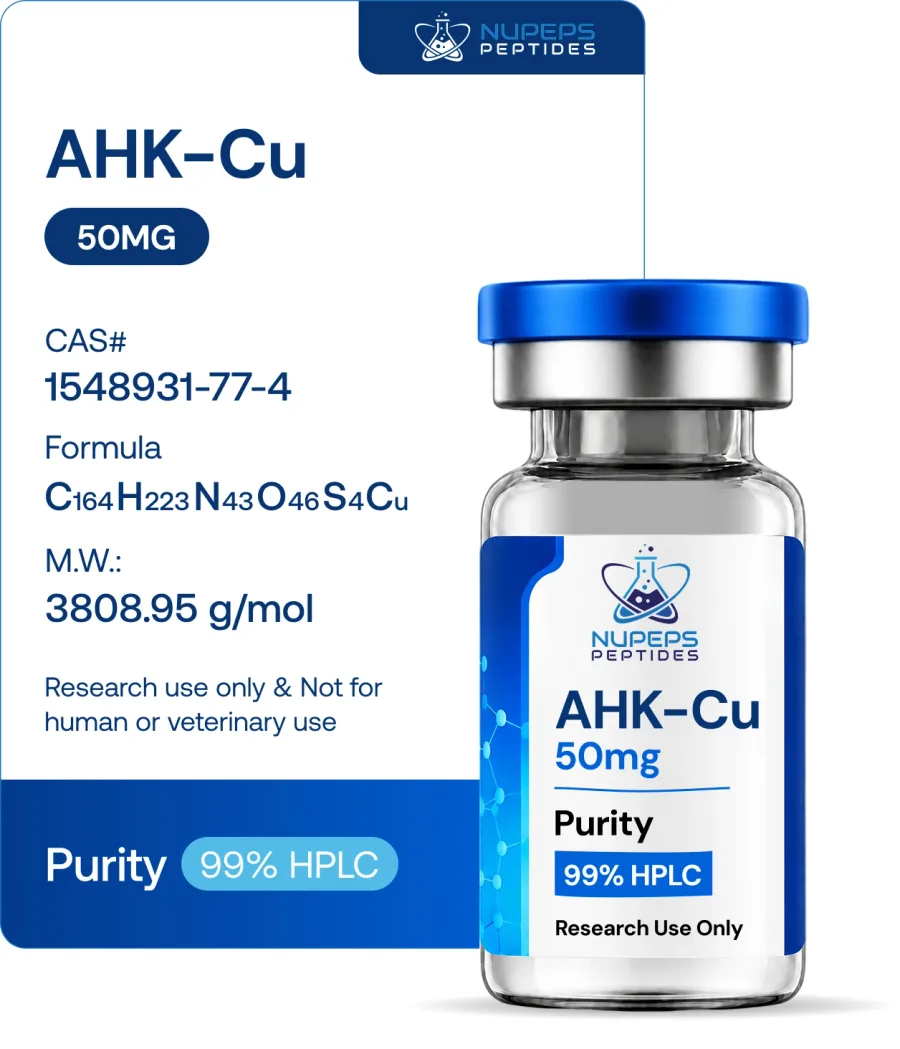
50MG / vial · ≥ 99% purity
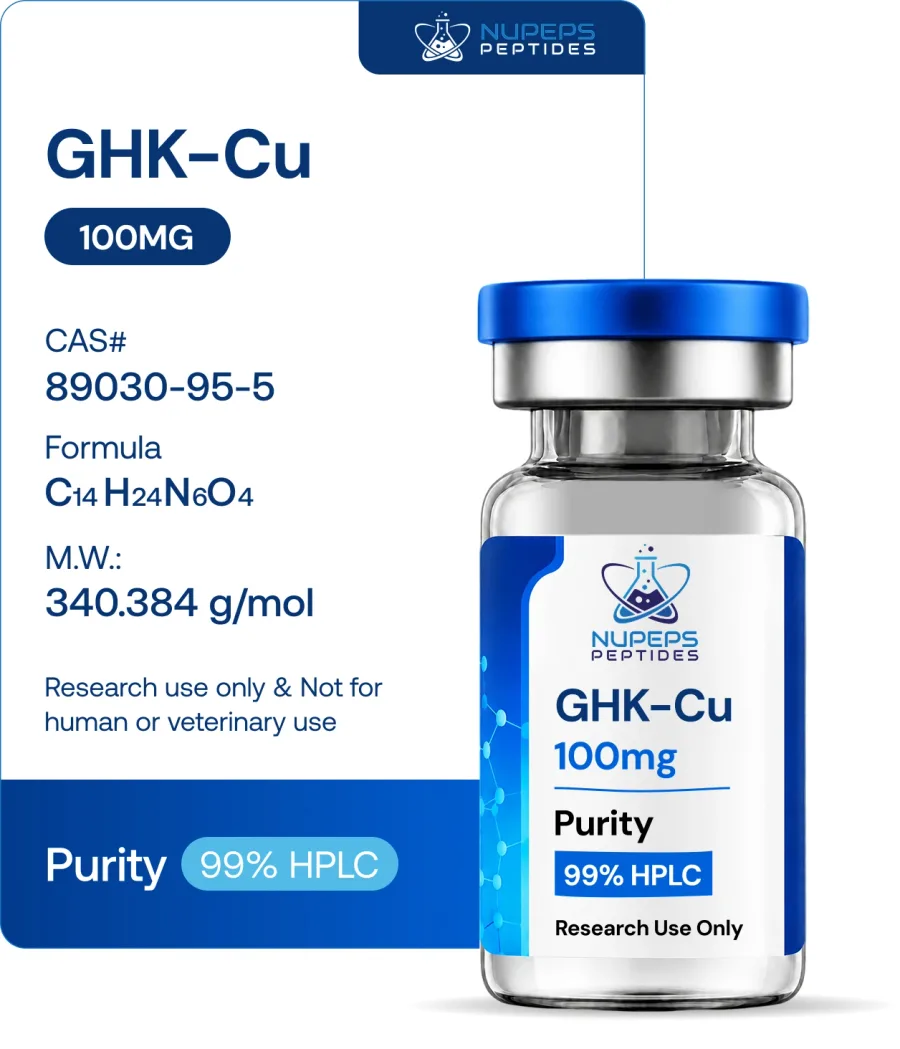
100MG / vial · ≥ 99% purity
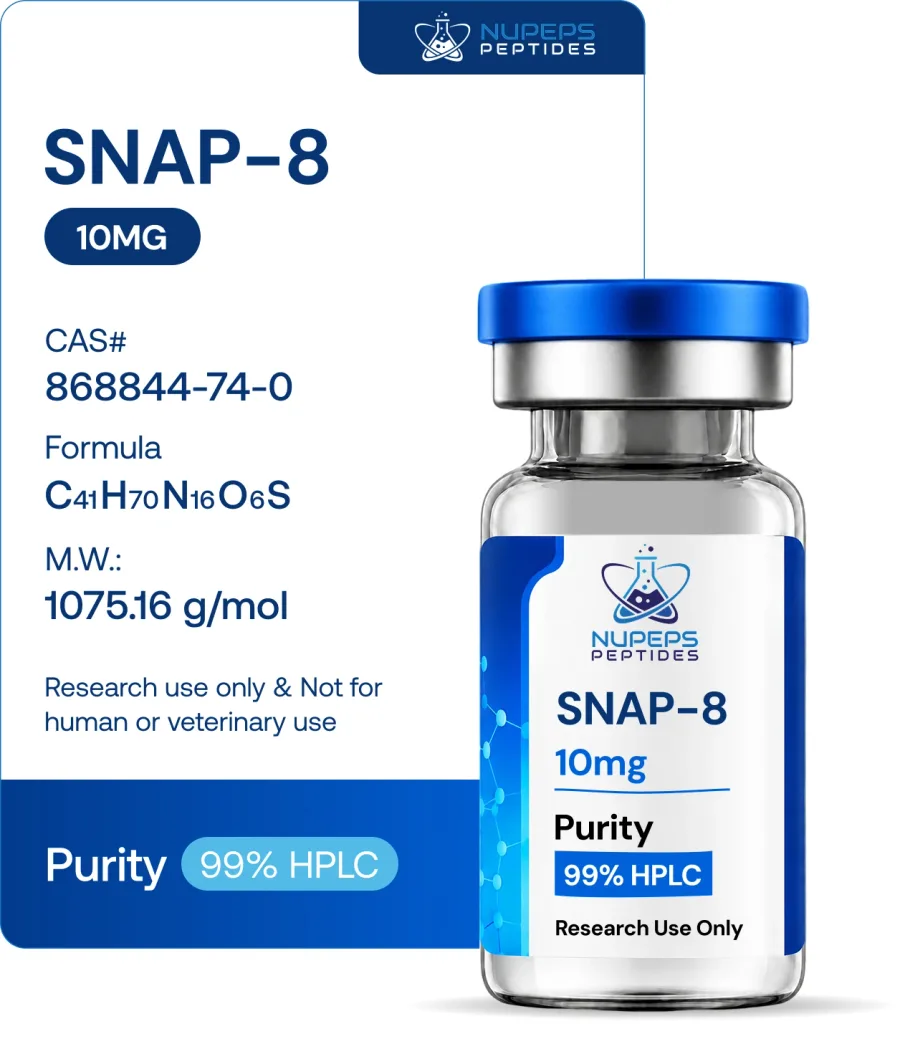
10MG / vial · ≥ 99% purity
"Cosmetic peptides" is the research field's name for peptides studied in skin, follicle, and connective-tissue laboratory models — in vitro and ex vivo systems, not finished cosmetic products. This category contains four NUPEPS PEPTIDES research materials: the copper tripeptides GHK-Cu (50MG and 100MG) and AHK-Cu 50MG, and the octapeptide SNAP-8 10MG. The copper tripeptides anchor the category: GHK-Cu is one of the most frequently requested compounds in our catalog, and the family's published record — fibroblast collagen and glycosaminoglycan studies, keratinocyte and skin-equivalent models, hair-follicle organ culture — is the context in which laboratories design work with all three materials.
The central comparison is between the two copper tripeptides. GHK-Cu and AHK-Cu differ by a single N-terminal amino acid (glycine versus alanine), share the same copper-binding His-Lys core, and have very different evidence bases: GHK-Cu has been studied since the 1970s, while AHK-Cu's direct record rests on a single hair-follicle study. Our AHK-Cu research guide keeps the two records separate and reviews what each molecule's literature does and does not show. SNAP-8 belongs to a different mechanistic family — an eight-amino-acid peptide studied in laboratory models of peptide signaling — and is typically compared on study-design grounds rather than against the copper compounds.
A copper tripeptide is a metallopeptide: the specified material is the peptide–copper complex, not the peptide alone. A complete batch COA therefore has three parts — reversed-phase HPLC for purity (NUPEPS PEPTIDES specifies ≥99%), mass spectrometry confirming the complex's expected mass, and verification that the copper is bound as specified, since material that has lost its metal will not always show the difference on a chromatogram. Our guides to how peptide testing labs verify purity and identity and how to choose a peptide supplier detail these checks.
All products in this category are supplied strictly for laboratory and in-vitro research use only. Not for human or veterinary use.