Peptide Information
What Is TB-500? Thymosin Beta-4 Structure and Research
By NUPEPS Research TeamDecember 4, 2025

TB500: Promoting Muscle Recovery and Regeneration
All articles and product information provided on this website are intended for educational and informational purposes only. These products are for in vitro research, conducted outside the human body, and are not approved pharmaceuticals. They have not been evaluated by the U.S. Food and Drug Administration (FDA) and must not be used to prevent, treat, or cure any medical condition. Introducing these products into humans or animals is strictly prohibited.
Overview of TB500
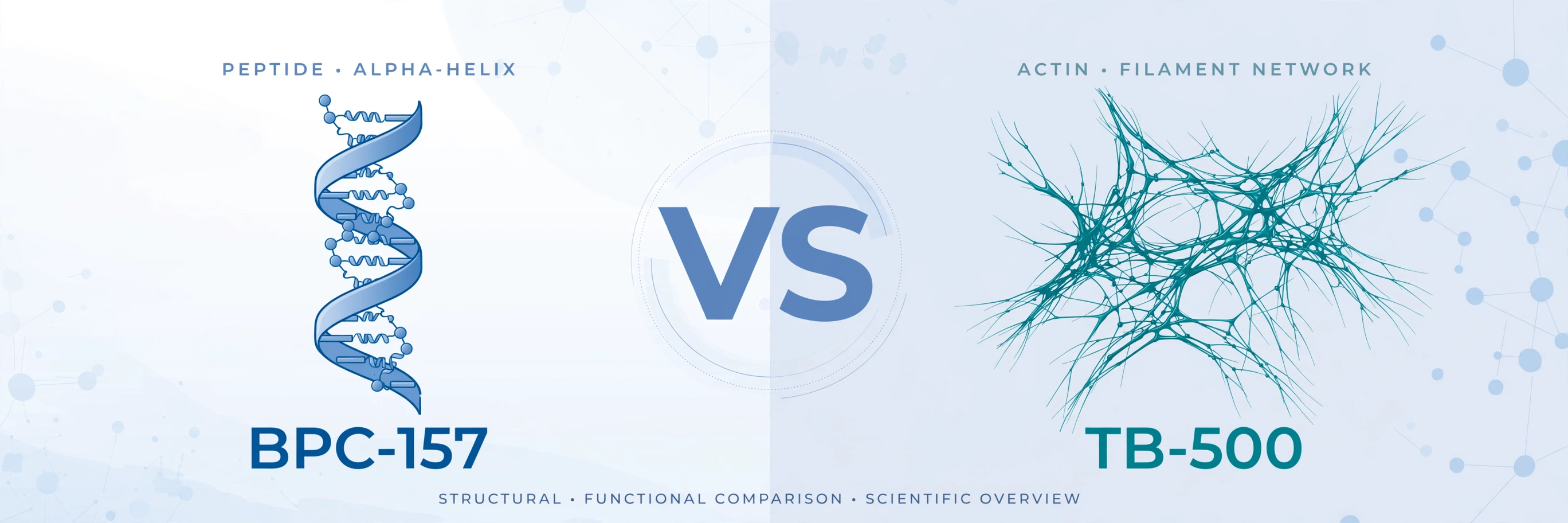
TB500 (TB-500) is a synthetic peptide fragment of thymosin beta-4: the seven-amino-acid sequence Ac-LKKTETQ, corresponding to residues 17–23 of the 43-amino-acid parent protein, which was originally isolated from thymus tissue. TB-500 is not the full thymosin beta-4 protein — it reproduces the protein’s central actin-binding region, and most published research in this area studies the parent protein or this fragment in cell and tissue models. It plays an essential role in physiological processes related to tissue repair, muscle recovery, and cell regeneration. Its unique amino acid sequence provides structural stability and biological activity, allowing it to maintain functionality across various physiological environments. TB500 is widely distributed throughout the body, particularly in muscle tissue, reflecting its connection to muscle health and repair.
Mechanisms of Muscle Recovery
TB500 promotes muscle recovery through multiple interconnected mechanisms. It facilitates cell migration, enhancing the movement of myoblasts to sites of muscle injury. This process involves cytoskeletal remodeling, allowing myoblasts to reach damaged areas efficiently and contribute to tissue regeneration. TB500 also activates satellite cells, the stem cells of muscle tissue, guiding them to proliferate and differentiate into myoblasts, which fuse to form new muscle fibers. This action improves both the quantity and quality of regenerated muscle tissue.
Angiogenesis is another key function of TB500. By stimulating the expression of vascular endothelial growth factor (VEGF) and activating intracellular pathways such as PI3K-Akt and MAPK, TB500 promotes the formation of new blood vessels. It also stabilizes the structure of these vessels by regulating extracellular matrix components like collagen and fibronectin, ensuring sustained blood supply to injured muscle and supporting optimal recovery.
TB500 exhibits anti-inflammatory and immune-regulatory properties, reducing the expression of inflammatory cytokines including TNF-α, IL-1β, and IL-6. It also modulates immune cell activity, promoting macrophage polarization toward a reparative M2 phenotype and regulating T cell responses, which collectively coordinate tissue repair and limit secondary damage.
Effects on Muscle Recovery, Fatigue, and Growth
TB500 accelerates muscle injury repair by shortening recovery time and enhancing the structural and functional quality of regenerated tissue. Muscle fibers repaired under TB500 treatment are more uniform and demonstrate improved contractile strength and endurance. TB500 also alleviates muscle fatigue by regulating energy metabolism and oxidative stress. It promotes mitochondrial biogenesis, enhances ATP production, and supports efficient utilization of glucose and fatty acids. Its antioxidant properties reduce reactive oxygen species accumulation, protecting muscle cells from oxidative damage during exercise.
Additionally, TB500 supports muscle growth by stimulating protein synthesis via the mTOR signaling pathway and regulating transcription factors involved in muscle development. It also influences muscle fiber type composition, promoting adaptations that enhance endurance or strength depending on physiological demands.
Applications of TB500
In sports, TB500 can help prevent injuries, accelerate recovery from muscle strains, and improve athletic performance by reducing fatigue and enhancing muscle strength. In rehabilitation medicine, it serves as an adjunct to conventional therapy, supporting recovery from trauma, surgery, or neurological conditions that cause muscle atrophy. TB500 has shown therapeutic potential in models of muscle atrophy associated with spinal cord injury and neurological disorders, promoting muscle proliferation and preventing excessive cell death.
Conclusion
TB500 plays a critical role in muscle recovery, regeneration, and growth. By promoting cell migration, satellite cell activation, angiogenesis, and regulating inflammation and immune responses, TB500 enhances both the speed and quality of muscle repair. Its applications extend from athletic performance enhancement to rehabilitation medicine, offering promising potential for muscle injury treatment and management of muscle atrophy.
Frequently asked questions
What is TB500?
TB500 (TB-500) is a synthetic peptide fragment of thymosin beta-4 — the seven-amino-acid sequence Ac-LKKTETQ, corresponding to residues 17–23 of the 43-amino-acid parent protein originally isolated from thymus tissue. The article notes the thymosin beta-4 pathway is widely distributed throughout the body, particularly in muscle tissue, reflecting its connection to muscle health and repair, and that the fragment reproduces the parent protein's central actin-binding region.
How does TB500 promote angiogenesis in research models?
The article explains that TB500 stimulates expression of vascular endothelial growth factor (VEGF) and activates intracellular pathways such as PI3K-Akt and MAPK to promote formation of new blood vessels. It also stabilizes these vessels by regulating extracellular matrix components like collagen and fibronectin, supporting sustained blood supply to injured muscle in research models.
What anti-inflammatory actions does the article attribute to TB500?
According to the article, TB500 reduces expression of inflammatory cytokines including TNF-α, IL-1β, and IL-6. It also modulates immune cell activity, promoting macrophage polarization toward a reparative M2 phenotype and regulating T cell responses — actions researchers study for how they coordinate tissue repair and limit secondary damage in experimental models.
All products are intended strictly for laboratory research and in-vitro use only. Not for human or veterinary consumption, diagnostic, or therapeutic use. Products are not drugs, foods, cosmetics, or dietary supplements and may not be misbranded, misused, or mislabeled.
Related research products
Compounds discussed in this guide, available for laboratory research.