Peptide Information
Retatrutide: The Triple Agonist in Metabolic Research
By NUPEPS Research TeamDecember 4, 2025
Author: NUPEPS Peptides Research Team
Reviewed by: NUPEPS Peptides Research Team
Last revised: October 13, 2026
Conflicts and scope note: NUPEPS Peptides sells research material designated NP-III (RT), a research reference material in the compound class discussed in this article, and has a commercial interest in this category. This article is an educational summary of published research. It is not medical advice, and nothing in it is a recommendation to use any compound in humans or animals.
Retatrutide (development code LY3437943) is an investigational single peptide that activates three hormone receptors at once: the glucose-dependent insulinotropic polypeptide (GIP) receptor, the glucagon-like peptide-1 (GLP-1) receptor, and the glucagon receptor. It is being developed by Eli Lilly and Company and, as of this revision, has not been approved by the U.S. Food and Drug Administration (FDA) or any other regulator. It exists in two worlds that should not be confused: as a pharmaceutical candidate moving through late-stage clinical trials, and as a research compound studied in laboratory settings. This article reviews the published evidence for the molecule — what it is, how it was designed to work, what the phase 2 trials actually showed, which adverse events those trials reported, and where the phase 3 programme stands — using primary sources only.
Mechanism: why three receptors?
The design logic was set out by Coskun and colleagues in Cell Metabolism in 2022, in the paper that introduced LY3437943 "from discovery to clinical proof of concept." In vitro, the molecule shows balanced activity at the glucagon and GLP-1 receptors, with comparatively greater activity at the GIP receptor. The rationale for combining the three is that each receptor contributes something the others do not:
- GLP-1 receptor activation enhances glucose-dependent insulin secretion, slows gastric emptying, and reduces calorie intake through appetite pathways.
- GIP receptor activation also supports glucose-dependent insulin secretion and, in the discovery team's preclinical work, contributed to the calorie-intake side of the energy-balance equation.
- Glucagon receptor activation is the distinctive arm. Glucagon signalling increases energy expenditure and promotes hepatic fat oxidation — effects that, on their own, would raise blood glucose, but which the GLP-1 and GIP components are intended to counterbalance on the glycaemic side.
In obese mice, LY3437943 reduced body weight and improved glycaemic control, and the authors reported that body weight loss was augmented by adding glucagon-receptor-mediated increases in energy expenditure to the GIP- and GLP-1-driven reduction in calorie intake. In other words, most incretin-based agents work almost entirely by reducing energy in; the triple agonist was engineered to also raise energy out. Early human pharmacokinetic work in the same paper supported a once-weekly schedule in the clinical programme, with a reduction in body weight still observable up to day 43 after a single administration in the phase 1 study. These are preclinical and early-phase findings — they explain why the molecule was built the way it was, not what it does in any individual.
What the phase 2 evidence showed
Obesity (Jastreboff et al., New England Journal of Medicine, 2023)
The pivotal phase 2 obesity trial randomised 338 adults with obesity, or overweight with at least one weight-related complication, and without type 2 diabetes, to once-weekly retatrutide or placebo for 48 weeks (NCT04881760). Results showed a clear dose response. At the primary endpoint of 24 weeks, the least-squares mean change in body weight in the highest-dose group was −17.5%, versus −1.6% with placebo. At 48 weeks, the figures were −24.2% in the highest-dose group versus −2.1% with placebo; the lower-dose groups fell in between (−8.7% to −22.8%). At 48 weeks, 83% of participants in the highest-dose group had lost at least 15% of their baseline body weight, and every participant in that group lost at least 5%. The authors noted that weight loss had not clearly plateaued by the end of the 48-week treatment period in the higher-dose groups.
Type 2 diabetes (Rosenstock et al., The Lancet, 2023)
In a separate phase 2 trial, 281 adults with type 2 diabetes were randomised to retatrutide, placebo, or the active comparator dulaglutide for 36 weeks (NCT04867785). At 24 weeks, HbA1c fell by 2.02 percentage points in the highest-dose retatrutide group, compared with 0.01 points with placebo and 1.41 points with dulaglutide. Body weight fell dose-dependently: at 36 weeks, the highest-dose group had lost 16.94% of baseline body weight, versus 3.00% with placebo and 2.02% with dulaglutide. These glycaemic and weight results were the basis for the dose selection carried into the phase 3 programme.
Liver fat substudy (Sanyal et al., Nature Medicine, 2024)
A substudy of the obesity trial examined 98 participants who also had metabolic dysfunction-associated steatotic liver disease (MASLD). Mean relative reductions in liver fat were large and dose-dependent: at 24 weeks, liver fat fell by 82.4% in the highest-dose group and 81.4% in the next-highest, versus an increase of 0.3% with placebo. At 48 weeks, the highest-dose group showed a mean relative reduction of 86.0%, and 93% of that group had liver fat below 5% — the threshold the investigators used to define resolution of steatosis. The investigators reported no hepatotoxicity signals in the trial population through 48 weeks. This was a small substudy of a larger trial, so its findings are hypothesis-generating rather than definitive, but they are a major reason the glucagon arm of the molecule attracts research interest in hepatic models.
Safety signals reported in the trials
Across the phase 2 programme, the most commonly reported adverse events were gastrointestinal. In the obesity trial, the investigators reported that these events were dose-related, mostly mild to moderate in severity, and partially mitigated when a lower starting dose was used in dose escalation. In the diabetes trial, mild-to-moderate gastrointestinal events — including nausea, diarrhoea, vomiting and constipation — were reported in 35% of participants receiving retatrutide, compared with 13% on placebo; there were no reports of severe hypoglycaemia and no deaths in that study. The obesity trial also recorded dose-dependent increases in heart rate, which peaked at 24 weeks and declined thereafter. In the MASLD substudy, gastrointestinal events were likewise the most frequent, with higher frequency in the higher-dose groups, and no hepatotoxicity signal was observed. In the phase 3 releases discussed below, Lilly has likewise described gastrointestinal events as the most common adverse events. These are the adverse events as reported by the trial investigators and the sponsor; they are summaries of clinical-trial safety data, not guidance for any other setting.
Phase 3 status: the TRIUMPH programme
Lilly's phase 3 programme for retatrutide, named TRIUMPH, spans obesity and overweight with weight-related complications, type 2 diabetes, knee osteoarthritis, obstructive sleep apnoea, chronic low back pain, cardiovascular and renal outcomes, and MASLD. Topline and detailed readouts to date include:
- TRIUMPH-4 (knee osteoarthritis; announced December 11, 2025). In adults with obesity or overweight and knee osteoarthritis, without diabetes, the two highest doses met all primary and key secondary endpoints at 68 weeks. The highest dose produced an average weight reduction of 28.7% (71.2 lbs), and knee pain scores on the WOMAC index fell by up to an average of 4.5 points (75.8%).
- TRIUMPH-1 (obesity without diabetes; announced May 21, 2026). In 2,339 participants treated for 80 weeks, the highest dose produced an average weight loss of 28.3% (70.3 lbs), with 45.3% of participants losing at least 30% of their body weight. The lowest dose tested produced an average loss of 19.0% (47.2 lbs). In a prespecified extension subgroup with baseline BMI of 35 or higher, participants continuing on the highest dose reached an average of 30.3% (85.0 lbs) at 104 weeks.
- TRIUMPH-2 (obesity with type 2 diabetes; detailed results presented at the European Association for the Study of Diabetes annual meeting and published in The Lancet, September 2026). In 1,152 participants treated for 80 weeks, average weight loss was 20.8% (49.6 lbs) at the highest dose versus 4.0% with placebo, and HbA1c fell by up to an average of 1.6 percentage points, with up to 40.0% of participants reaching an HbA1c below 5.7%.
A separate phase 3 trial in type 2 diabetes, TRANSCEND-T2D-1, has also been published in The Lancet (2026), reporting HbA1c reductions of up to 1.9 percentage points at 40 weeks. Further TRIUMPH trials are ongoing. Retatrutide remains investigational: positive trial readouts are not an approval, and the compound has not been authorised for any therapeutic use.
Retatrutide as a research compound
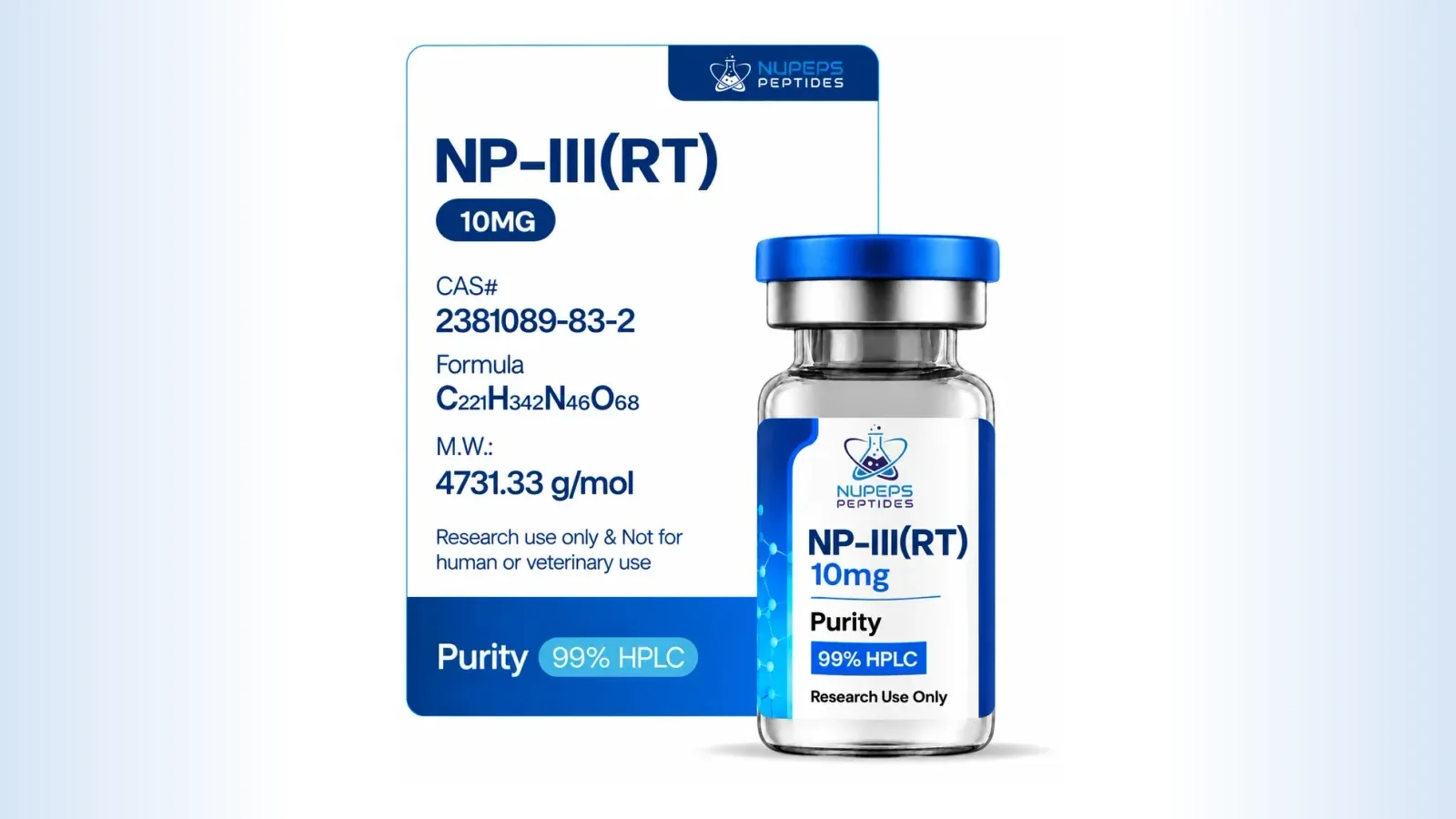
Separate from Lilly's pharmaceutical development programme, retatrutide is studied as a laboratory research compound in metabolic, hepatic and receptor-pharmacology models. NUPEPS Peptides supplies research material under its designation NP-III (RT) for in-vitro and laboratory research use only, in 10 mg and 20 mg presentations. It is not a medicine, is not the Lilly clinical-trial product, and is not for human or veterinary use, diagnostic use, or consumption of any kind.
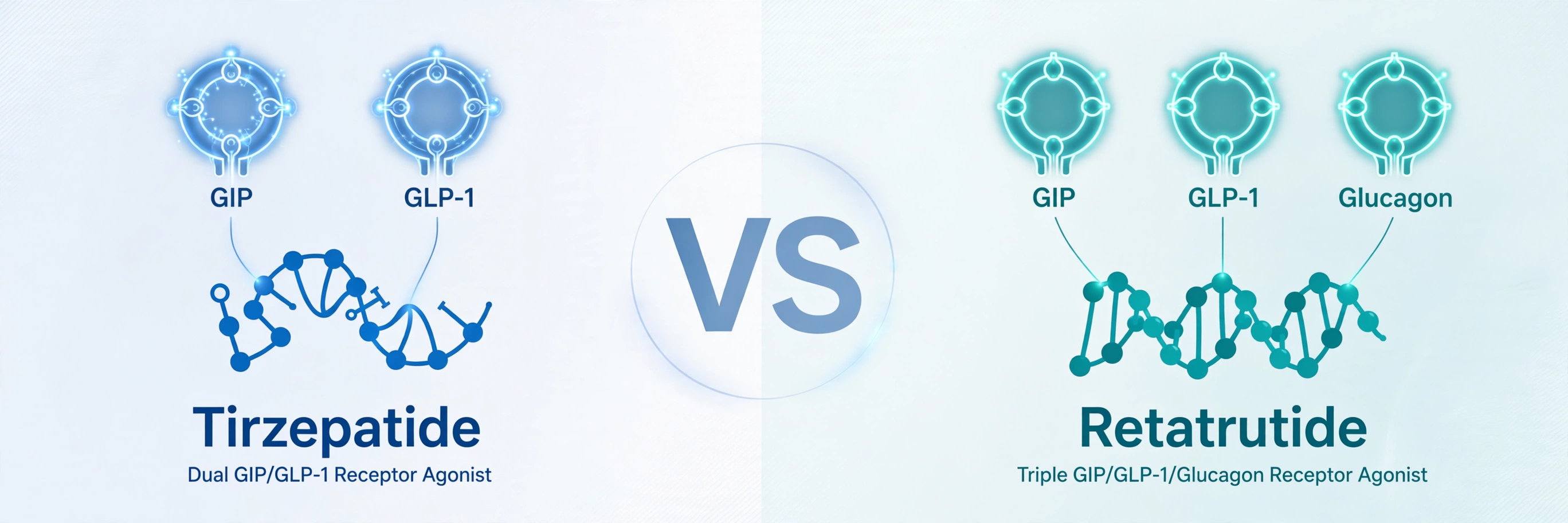
For readers comparing the incretin classes, our tirzepatide vs retatrutide comparison sets the dual-agonist and triple-agonist evidence side by side. And because published trial results are only meaningful when the material in hand is verifiably what it claims to be, our guide to reading a peptide certificate of analysis explains how identity and purity are documented batch by batch.
Frequently asked questions
Is retatrutide approved by the FDA?
No. Retatrutide is an investigational compound developed by Eli Lilly. It has completed several phase 3 trials with positive reported readouts, but it has not been approved by the FDA for any use.
What did the phase 2 obesity trial actually find?
In the 48-week trial published in the New England Journal of Medicine (2023), participants receiving the highest dose lost an average of 24.2% of baseline body weight, versus 2.1% with placebo, with 83% of that group losing at least 15%.
How is a triple agonist different from tirzepatide?
Tirzepatide activates two receptors (GIP and GLP-1). Retatrutide adds a third — the glucagon receptor — which the discovery research links to increased energy expenditure and hepatic fat oxidation, on top of the intake-reduction effects of the other two. Our comparison article covers this in detail.
What side effects were reported in the trials?
The most common adverse events were gastrointestinal (nausea, diarrhoea, vomiting, constipation), generally mild to moderate and dose-related. The obesity trial also reported dose-dependent increases in heart rate that peaked at 24 weeks and then declined.
What is NP-III (RT)?
NP-III (RT) is NUPEPS Peptides' designation for a research reference material in this compound class, supplied strictly for laboratory and in-vitro research. It is not a drug and is not for human or veterinary use.
Where can I check the documentation for research material?
Each batch is documented with a certificate of analysis covering identity and purity testing. Our guide to reading a peptide COA shows what to look for.
References
- Coskun T, Urva S, Roell WC, et al. LY3437943, a novel triple glucagon, GIP, and GLP-1 receptor agonist for glycemic control and weight loss: from discovery to clinical proof of concept. Cell Metabolism. 2022;34(9):1234–1247.e9. https://www.cell.com/cell-metabolism/fulltext/S1550-4131(22)00312-6
- Jastreboff AM, Aronne LJ, Ahmad NN, et al. Triple-hormone-receptor agonist retatrutide for obesity — a phase 2 trial. New England Journal of Medicine. 2023. doi:10.1056/NEJMoa2301972. https://doi.org/10.1056/NEJMoa2301972 (ClinicalTrials.gov: NCT04881760)
- Rosenstock J, Frias J, Jastreboff AM, et al. Retatrutide, a GIP, GLP-1 and glucagon receptor agonist, for people with type 2 diabetes: a randomised, double-blind, placebo and active-controlled, parallel-group, phase 2 trial conducted in the USA. The Lancet. 2023. doi:10.1016/S0140-6736(23)01053-X. https://doi.org/10.1016/S0140-6736(23)01053-X (ClinicalTrials.gov: NCT04867785)
- Sanyal AJ, Kaplan LM, Frias JP, et al. Triple hormone receptor agonist retatrutide for metabolic dysfunction-associated steatotic liver disease: a randomized phase 2a trial. Nature Medicine. 2024. doi:10.1038/s41591-024-03018-2. https://www.nature.com/articles/s41591-024-03018-2
- Eli Lilly and Company. Lilly's triple agonist, retatrutide, delivered weight loss of up to an average of 71.2 lbs along with substantial relief from osteoarthritis pain in first successful Phase 3 trial (TRIUMPH-4). Press release, December 11, 2025. (ClinicalTrials.gov: NCT05931367)
- Eli Lilly and Company. Lilly's triple agonist, retatrutide, delivered powerful weight loss in pivotal Phase 3 obesity trial (TRIUMPH-1). Press release, May 21, 2026. https://lilly.mediaroom.com/2026-05-21-Lillys-triple-agonist,-retatrutide,-delivered-powerful-weight-loss-in-pivotal-Phase-3-obesity-trial (ClinicalTrials.gov: NCT05929066)
- Eli Lilly and Company. Lilly's triple agonist, retatrutide, delivered substantial weight loss and A1C reduction, underscoring its potential promise for people with obesity and type 2 diabetes (TRIUMPH-2 detailed results, presented at EASD 2026 and published in The Lancet). Press release, September 2026.
This article is for educational purposes only. All NUPEPS Peptides products are supplied strictly for laboratory and in-vitro research use. Not for human or veterinary use, diagnostic or therapeutic use, or consumption.
Frequently asked questions
Which three receptors does retatrutide activate, and what does each contribute?
Retatrutide (LY3437943) activates the GIP receptor, the GLP-1 receptor, and the glucagon receptor in a single peptide. Per the Coskun et al. 2022 discovery paper, GLP-1 and GIP activation support glucose-dependent insulin secretion and reduced calorie intake, while glucagon receptor activation is the distinctive arm: it increases energy expenditure and promotes hepatic fat oxidation, with the incretin components counterbalancing its glycemic effects.
What did the phase 2 obesity trial report at 48 weeks?
In the trial published by Jastreboff and colleagues in the New England Journal of Medicine in 2023, 338 adults received once-weekly retatrutide or placebo for 48 weeks. At 48 weeks, mean body weight change was minus 24.2% in the highest-dose group versus minus 2.1% with placebo; 83% of the highest-dose group lost at least 15% of baseline weight, and weight loss had not clearly plateaued.
What adverse events were most commonly reported in the retatrutide trials?
Across the phase 2 program, gastrointestinal events were the most commonly reported adverse events: nausea, diarrhea, vomiting, and constipation, generally dose-related and mostly mild to moderate in severity. In the diabetes trial they were reported in 35% of retatrutide participants versus 13% on placebo, with no severe hypoglycemia and no deaths. The obesity trial also recorded dose-dependent heart rate increases that peaked at 24 weeks and declined thereafter.
All products are intended strictly for laboratory research and in-vitro use only. Not for human or veterinary consumption, diagnostic, or therapeutic use. Products are not drugs, foods, cosmetics, or dietary supplements and may not be misbranded, misused, or mislabeled.
Related research products
Compounds discussed in this guide, available for laboratory research.