Research Guides
CJC-1295 + Ipamorelin Blend: Why Labs Study the Pair
By NUPEPS Research TeamNovember 20, 2026
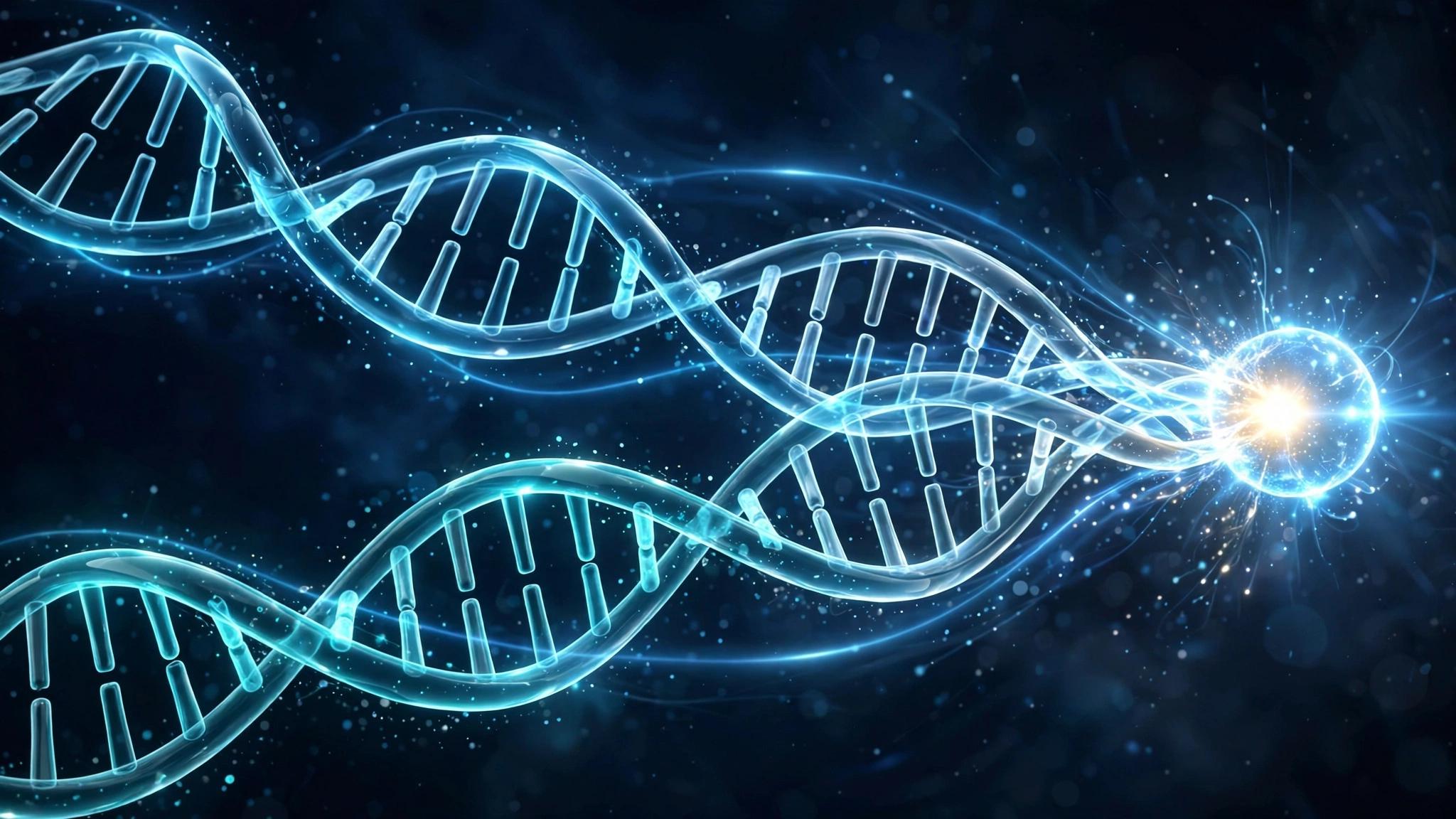
The CJC-1295 No DAC + Ipamorelin Blend is a single laboratory research material containing two distinct synthetic peptides in one vial: 10MG of CJC-1295 No DAC and 10MG of Ipamorelin, 20MG combined. NUPEPS PEPTIDES lists it as CJC-1295 No DAC 10MG Ipamorelin 10MG Blend, for laboratory and in vitro research only.
The two components act at different receptors on the same pituitary cell type. CJC-1295 No DAC is a growth hormone-releasing hormone analogue acting at the GHRH receptor. Ipamorelin is a selective secretagogue acting at the ghrelin receptor, GHS-R1a.
One fact governs everything that follows, stated here before any mechanism: no published study has tested this exact blend as a combined product. The rationale comes from the separate literatures of the two components and from older GHRH plus GHRP co-administration research using different molecules entirely.
What Exactly Is in This Blend?
The vial holds two separately defined peptides, not one new molecule. The first is CJC-1295 No DAC, a modified 29-amino-acid analogue of growth hormone-releasing factor, GRF(1-29). The second is Ipamorelin, a synthetic pentapeptide of five residues. Each retains its own identity, mass and receptor target.
The amounts matter because blend naming is inconsistent across suppliers. The NUPEPS PEPTIDES formulation is 10MG of each component per vial, confirmed on the product page itself, which states the size explicitly as 10MG CJC-1295 No DAC plus 10MG Ipamorelin per vial, 20MG combined material in total.
That composition separates this product from smaller blends elsewhere, in which a lower total is divided between the same two names. Laboratories must read per-component amounts, not the blend name alone, before treating two listings as equivalent.
Why Do Laboratories Study the Two Peptides Together?
The pairing follows from receptor geography. Somatotroph cells in the anterior pituitary carry both the GHRH receptor and the ghrelin receptor, GHS-R1a. A GHRH analogue engages the first receptor, while a ghrelin-mimetic secretagogue engages the second, so two inputs reach the same cell through independent doors.
Those doors open onto different intracellular signalling. GHRH receptor activation is classically linked to cyclic AMP pathways governing growth hormone synthesis and release readiness. Ghrelin receptor activation is linked to calcium-mobilising pathways governing secretion. Laboratory models use that separation to study how converging signals interact.
A combined material also fixes the pairing at sourcing. Both components arrive in one vial from one batch, removing one source of between-experiment variation: they cannot drift independently across suppliers or deliveries during comparative secretagogue work.
How Do the Two Components Differ?
| Property | CJC-1295 No DAC | Ipamorelin |
|---|---|---|
| Class | GHRH analogue; modified GRF(1-29) | Growth hormone secretagogue; GHRP-family pentapeptide |
| Receptor | GHRH receptor (GHRHR) on pituitary somatotrophs | Ghrelin receptor (GHS-R1a) on pituitary somatotrophs |
| Structure | 29 amino acids; tetrasubstituted GRF(1-29) amide; about 3,368 Da | 5 residues: Aib-His-D-2-Nal-D-Phe-Lys-NH2; about 712 Da |
| Half-life as reported in literature | None published in humans for the No DAC form; the 5.8–8.1-day value is the with-DAC form only | Short terminal half-life of 2 hours reported in human volunteers (Gobburu 1999) |
| Evidence base | Preclinical for the No DAC form; human pharmacology only for the with-DAC analogue | Animal pharmacology in rats and swine (Raun 1998); human pharmacokinetic modelling (Gobburu 1999) |
The evidence row is the most important row. The two components do not stand on equal published footing, and neither stands on a study of the blend. Any summary merging their records into one implied record for the combined product misstates both literatures at once.
What Did the Foundational Ipamorelin Study Actually Show?
Ipamorelin entered the literature in 1998, when Raun and colleagues at Novo Nordisk described it as the first selective growth hormone secretagogue. The paper reported a pentapeptide, Aib-His-D-2-Nal-D-Phe-Lys-NH2, identified within a chemistry programme that removed the central dipeptide of an earlier releasing peptide.
In vitro, Ipamorelin released growth hormone from primary rat pituitary cells with potency and efficacy similar to an older secretagogue comparator. Antagonist experiments indicated that it acted through a GHRP-like receptor rather than the GHRH receptor, placing its mechanism on the ghrelin-receptor side of the pairing.
The selectivity finding came from conscious swine. The comparators raised plasma ACTH and cortisol, while Ipamorelin did not raise either beyond levels seen after GHRH stimulation, even at exposures far above those needed for growth hormone release. None of the compounds changed FSH, LH, prolactin or TSH.
That is the honest scope of the anchor paper: rat pituitary cells, anaesthetised rats and conscious swine. It established receptor identity and an unusual selectivity profile in animal systems. It did not study Ipamorelin combined with any GHRH analogue, and it did not study this blend.
Citations: Raun K, et al. Ipamorelin, the first selective growth hormone secretagogue. European Journal of Endocrinology. 1998. PMID: 9849822. DOI: 10.1530/eje.0.1390552. See also Gobburu JVS, et al. Pharmacokinetic-pharmacodynamic modeling of ipamorelin, a growth hormone releasing peptide, in human volunteers. Pharmaceutical Research. 1999. PMID: 10496658. DOI: 10.1023/A:1018955126402.
What Did the CJC-1295 Literature Actually Study?
The CJC-1295 name entered the literature through a different programme. In 2005, Jetté and colleagues described albumin bioconjugates of human GRF(1-29) and identified their lead compound: a tetrasubstituted GRF(1-29) carrying an added reactive lysine derivative at its C terminus, designed to attach to serum albumin.
That albumin-binding design is the DAC concept, and it defines the form the early literature characterised. In rats, the lead compound produced a larger growth hormone response than unmodified GRF(1-29), remained detectable in plasma beyond 72 hours, and appeared on the albumin band in plasma analyses.
The human pharmacology that followed used that same long-acting form. Teichman and colleagues reported in 2006 that it produced sustained, multi-day changes in growth hormone and IGF-I measures in healthy adults, with an estimated half-life of 5.8 to 8.1 days across the study groups examined.
A companion 2006 study by Ionescu and Frohman examined pattern rather than size. Growth hormone secretion remained pulsatile during stimulation by the long-acting analogue: pulse frequency and magnitude were unaltered, while trough levels between pulses rose markedly alongside higher mean growth hormone and IGF-I measures.
Every one of those findings belongs to the with-DAC molecule. They show what an albumin-binding GHRH analogue does in the systems tested. They cannot transfer to the No DAC component of this blend, which lacks the albumin-binding modification and was not the compound those studies administered.
Citations: Jetté L, et al. Human growth hormone-releasing factor (hGRF)1-29-albumin bioconjugates activate the GRF receptor on the anterior pituitary in rats: identification of CJC-1295 as a long-lasting GRF analog. Endocrinology. 2005. PMID: 15817669. DOI: 10.1210/en.2004-1286. Teichman SL, et al. Prolonged stimulation of growth hormone (GH) and insulin-like growth factor I secretion by CJC-1295, a long-acting analog of GH-releasing hormone, in healthy adults. Journal of Clinical Endocrinology and Metabolism. 2006. PMID: 16352683. DOI: 10.1210/jc.2005-1536. Ionescu M, Frohman LA. Pulsatile secretion of growth hormone (GH) persists during continuous stimulation by CJC-1295, a long-acting GH-releasing hormone analog. Journal of Clinical Endocrinology and Metabolism. 2006. PMID: 17018654. DOI: 10.1210/jc.2006-1702.
Why Must the No DAC Form Be Distinguished from the With-DAC Form?
DAC stands for Drug Affinity Complex: the reactive modification that lets the with-DAC molecule bind covalently to serum albumin. Albumin binding shelters the peptide from rapid clearance, which is why the with-DAC literature reports persistence measured in days rather than in minutes or hours.
CJC-1295 No DAC, also described as Modified GRF(1-29), is the tetrasubstituted GRF(1-29) backbone without that modification. It shares the receptor target and stabilising substitutions, but carries no albumin anchor, so the multi-day pharmacokinetic record of its relative does not describe it at all.
The distinction is analytical as well as conceptual. The two forms are different molecules with different molecular masses, so a mass spectrometry identity check can tell them apart. A laboratory unsure which form its material contains cannot say which published literature its experiment builds on.
What Did Older GHRH and GHRP Co-Administration Research Show?
The idea of engaging both receptors at once predates both components. In 1990, Bowers and colleagues reported that a synthetic growth hormone-releasing peptide acted synergistically with growth hormone-releasing hormone in normal men, concluding the two acted independently.
The molecules in that experiment were not the molecules in this vial. The releasing peptide was an early hexapeptide of the GHRP family, and the partner was GHRH itself. The study established a class-level principle: two independent secretagogue pathways can produce a combined response exceeding either alone.
The principle was strong enough to become a diagnostic method. In 2000, Popovic and colleagues reported a multicentre study in which combined GHRH plus GHRP-6 stimulation separated adults with organic pituitary disease from healthy controls, performing as a reliable test of growth hormone secretory capacity.
Bowers and Granda-Ayala extended the same logic in 2001, studying GHRP-2 alone, GHRH alone and the two in combination in older adults. Their acute and chronic experiments again treated the pathways as interacting inputs whose combined behaviour differed from either input studied separately.
These papers explain why a GHRH analogue plus a selective secretagogue is a coherent laboratory pairing. They do not test Ipamorelin, they do not test CJC-1295 in either form, and they do not test any pre-mixed blend. The lineage is real; the transfer is inference.
Citations: Bowers CY, et al. Growth hormone (GH)-releasing peptide stimulates GH release in normal men and acts synergistically with GH-releasing hormone. Journal of Clinical Endocrinology and Metabolism. 1990. PMID: 2108187. DOI: 10.1210/jcem-70-4-975. Popovic V, et al. GH-releasing hormone and GH-releasing peptide-6 for diagnostic testing in GH-deficient adults. The Lancet. 2000. PMID: 11030292. DOI: 10.1016/S0140-6736(00)02755-0. Bowers CY, Granda-Ayala R. Growth hormone/insulin-like growth factor-1 response to acute and chronic growth hormone-releasing peptide-2, growth hormone-releasing hormone 1-44NH2 and in combination. Endocrine. 2001. PMID: 11322505. DOI: 10.1385/ENDO:14:1:079.
What Has No Published Study Shown About This Blend?
No published study has administered this exact blend as a combined product, in any model system, at the time of writing. Searches of the indexed literature return component studies, studies of related pairs and supplier descriptions, but no primary study whose test article is this material itself.
It follows that no published result describes the blend's combined behaviour directly. Statements about what the two components do together are extrapolations from single-compound data and from co-administration work on different molecules. Careful laboratories label them as extrapolations in their own records and publications.
The gap is specific, not general. The component literatures are genuine; what is missing is only, and exactly, a study of these two compounds together as the supplied combined product.
How Is a Two-Component Blend Verified in the Laboratory?
Verification of a blend is harder than verification of a single peptide, because every analytical check must succeed twice. Identity is confirmed by mass spectrometry, and a correct blend sample must show both expected molecular masses: one matching the 29-amino-acid GHRH analogue, one matching the pentapeptide.
A blend sample showing only one expected mass has failed, whichever is present. An unexplained extra mass is likewise a finding the analyst must resolve before the batch is used.
Purity and quantity are assessed by analytical chromatography, most commonly reversed-phase HPLC. A blend should present two resolved peaks, one per component, and quantity must account for both components rather than one undifferentiated total.
Two peaks also protect against a subtler error: a correct total quantity built from the wrong internal split. Because this product is defined by equal per-component amounts, a batch record that cannot distinguish the components cannot confirm the formulation the product name promises.
NUPEPS PEPTIDES publishes batch Certificates of Analysis at nupeps.com/coas, testing every batch for purity, quantity and sterility only. Match the certificate to the batch and treat one describing only one component as incomplete.
How Does This Guide Differ from the Single-Compound Comparison?
NUPEPS PEPTIDES already publishes a head-to-head comparison, CJC-1295 vs Ipamorelin, which weighs the two compounds against each other as separate research materials. That guide answers a selection question: which single compound, and which receptor pathway, fits a given research design.
This guide answers a different question about a different material. Its subject is the combined product as supplied: what is in the vial, why the pairing exists, what the separate and historical literatures do and do not establish, and how a two-component batch is verified.
The two guides are complementary. A laboratory deciding between the single compounds starts with the comparison; a laboratory that has chosen the combined format uses this guide. NUPEPS PEPTIDES also lists the components separately as CJC-1295 No DAC 10MG and Ipamorelin 10MG, as laboratory research materials.
What Are the Most Common Questions About This Blend?
Has the blend itself been tested in a published study?
No. The supporting literature covers Ipamorelin alone, the with-DAC relative of the other component, and older co-administration experiments pairing GHRH with earlier releasing peptides: three separate records, none a study of this vial.
How much of each component is in the NUPEPS PEPTIDES blend?
The vial contains 10MG of CJC-1295 No DAC and 10MG of Ipamorelin, 20MG combined, as stated on the NUPEPS PEPTIDES product page. That per-component split defines this product and separates it from blends elsewhere in which a smaller total is divided between the same names.
Is CJC-1295 No DAC the same compound as CJC-1295 with DAC?
No. They share a tetrasubstituted GRF(1-29) backbone and the same receptor, but the with-DAC form carries an added albumin-binding modification the No DAC form lacks. The published human pharmacology and the 5.8 to 8.1 day half-life belong to the with-DAC form only.
Why does the pairing involve two different receptors?
Because the research question concerns converging signals. The GHRH analogue engages the GHRH receptor, linked to cyclic AMP signalling, while Ipamorelin engages the ghrelin receptor GHS-R1a, linked to calcium-mobilising signalling. Older co-administration research showed such independent pathways can interact, the rationale laboratories cite.
How can a laboratory verify a batch of the blend?
Match the batch Certificate of Analysis to the supplied vial and check that both components are addressed: two expected masses on mass spectrometry, two resolved peaks on HPLC, and quantity and sterility reported for the batch. NUPEPS PEPTIDES publishes certificates at nupeps.com/coas, covering purity, quantity and sterility.
Does studying the blend replace studying the single compounds?
No. The blend fixes the pairing at sourcing, which suits comparative secretagogue designs, but it cannot substitute for single-compound control arms or for the separate published records. Laboratories comparing the pathways usually need the single materials as well, which NUPEPS PEPTIDES lists individually alongside the blend.
What Should a Laboratory Take from This Record?
The blend is a well-defined material with an honestly bounded record. Its contents are exact: 10MG of a GHRH analogue without the albumin-binding modification, plus 10MG of a selective ghrelin-receptor pentapeptide. Its rationale is a documented class-level principle from older co-administration research, not a product-level result.
The standard for using it is therefore verification, not assumption: confirm both identities, confirm both quantities, confirm sterility for the specific batch, and cite the component literatures for what they actually studied. This article is educational material about a research compound and is not medical advice.
Frequently asked questions
Is CJC-1295 + Ipamorelin Blend: Why Labs Study the Pair for human use?
No. All compounds discussed in this guide are strictly for laboratory research use only. Not for human or veterinary use.
Where can I find the Certificate of Analysis?
Certificates of Analysis are available in our COA library. Each batch is third-party tested for purity and identity.
How should research compounds be stored?
Store according to the vial label instructions. Generally, lyophilized compounds should be kept in a cool, dry place away from light. Refer to the specific product documentation for details.
All products are intended strictly for laboratory research and in-vitro use only. Not for human or veterinary consumption, diagnostic, or therapeutic use. Products are not drugs, foods, cosmetics, or dietary supplements and may not be misbranded, misused, or mislabeled.