Description
What Is CJC-1295?
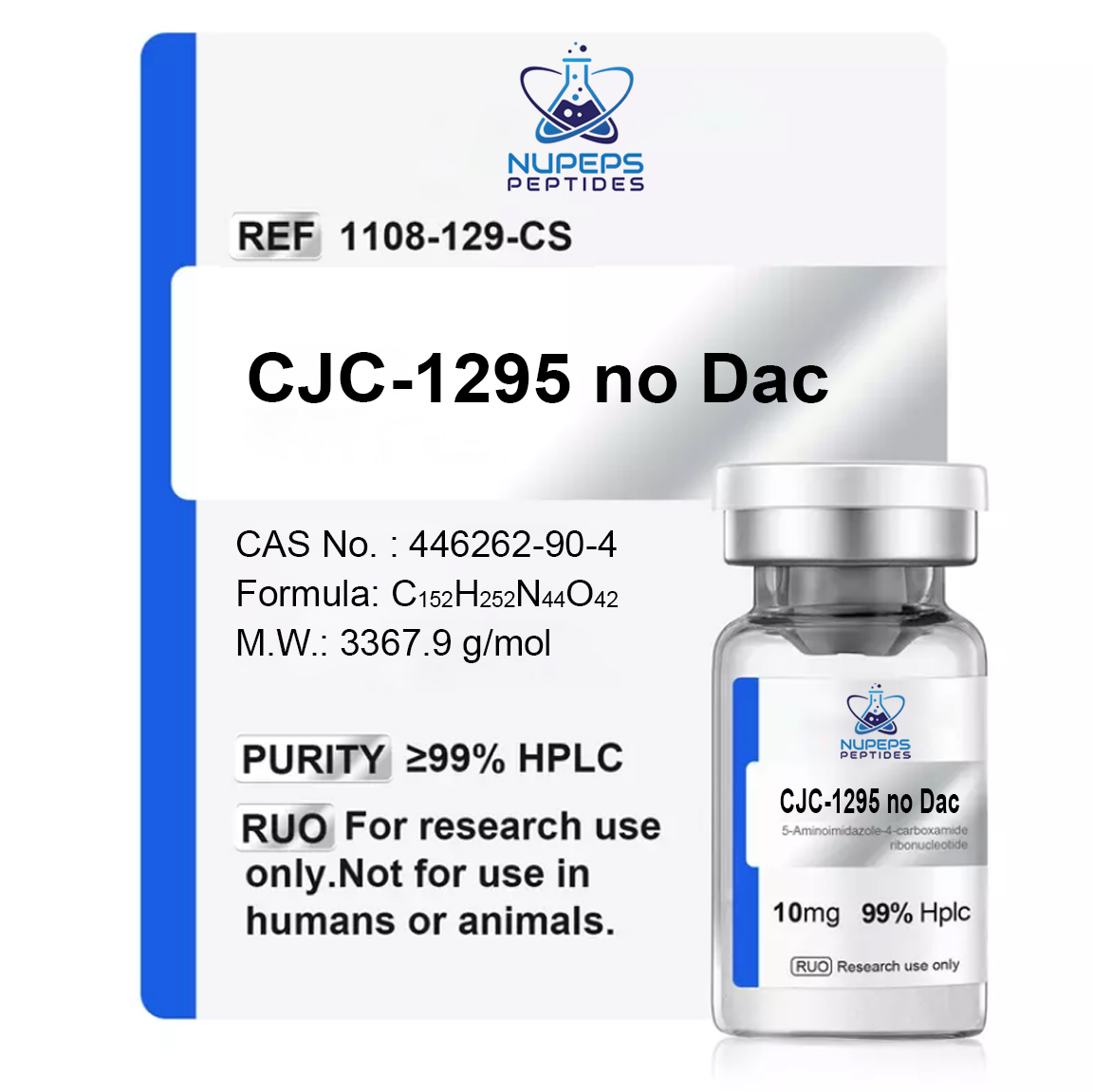
CJC-1295 is a synthetic growth hormone-releasing hormone analogue. It is widely used in peptide research. Specifically, it stimulates natural, pulsatile growth hormone secretion. Unlike long-acting DAC variants, the No DAC formula offers a shorter active window. As a result, researchers gain precise control over dosing intervals and hormone response patterns. Therefore, it remains one of the most studied compounds in endocrine and metabolic research today.
Key Features of CJC-1295
Pulsatile GH Stimulation This peptide mimics GHRH activity. Consequently, it promotes natural, transient increases in growth hormone secretion. This supports research into physiologic GH rhythms and regulation.
Short-Acting Profile Its half-life is shorter than DAC variants. This allows tighter control over dosing intervals. As a result, researchers can precisely study GH pulses and their downstream effects.
IGF-1 Modulation CJC-1295 increases GH output. In turn, this indirectly supports IGF-1 production. Therefore, it offers valuable insight into growth signaling pathways and tissue response mechanisms. Researchers often pair it with complementary compounds such as Ipamorelin or other GHRP peptides for a more complete picture of GH axis activity.
Research Benefits
Recovery and Tissue Research GH and IGF-1 pathways are associated with cellular repair and protein synthesis. Additionally, they support tissue regeneration. For this reason, this compound is highly relevant in recovery-focused studies. Furthermore, research in this area continues to expand across multiple disciplines.
Metabolic Function Support Growth hormone plays a key role in lipid utilization. It also supports energy balance. Therefore, CJC-1295 is useful for investigating fat metabolism and metabolic efficiency. Moreover, studies exploring body composition frequently reference it as a foundational research tool. For related compounds, our peptide research catalog offers a range of supporting options.
Research Applications
CJC-1295 is relevant across several key research areas. These include:
- Growth hormone pulsatility and endocrine rhythm studies
- IGF-1 signaling and anabolic pathway research
- Tissue repair and regeneration models
- Fat metabolism and energy utilization studies
- Age-related GH decline and hormone regulation research