Peptide Information
BPC-157 Tissue Repair: Gastrointestinal and Joint Studies
By NUPEPS Research TeamDecember 4, 2025

Research-Use Only
BPC-157 (Body Protection Compound-157) is a synthetic pentadecapeptide investigated in published preclinical research on tissue repair processes. All NUPEPS products are supplied strictly for laboratory research and in-vitro use only. Not for human or veterinary consumption, diagnostic, or therapeutic use. These products are not pharmaceuticals and have not received approval from the U.S. Food and Drug Administration (FDA).
Overview of BPC-157 in the Literature
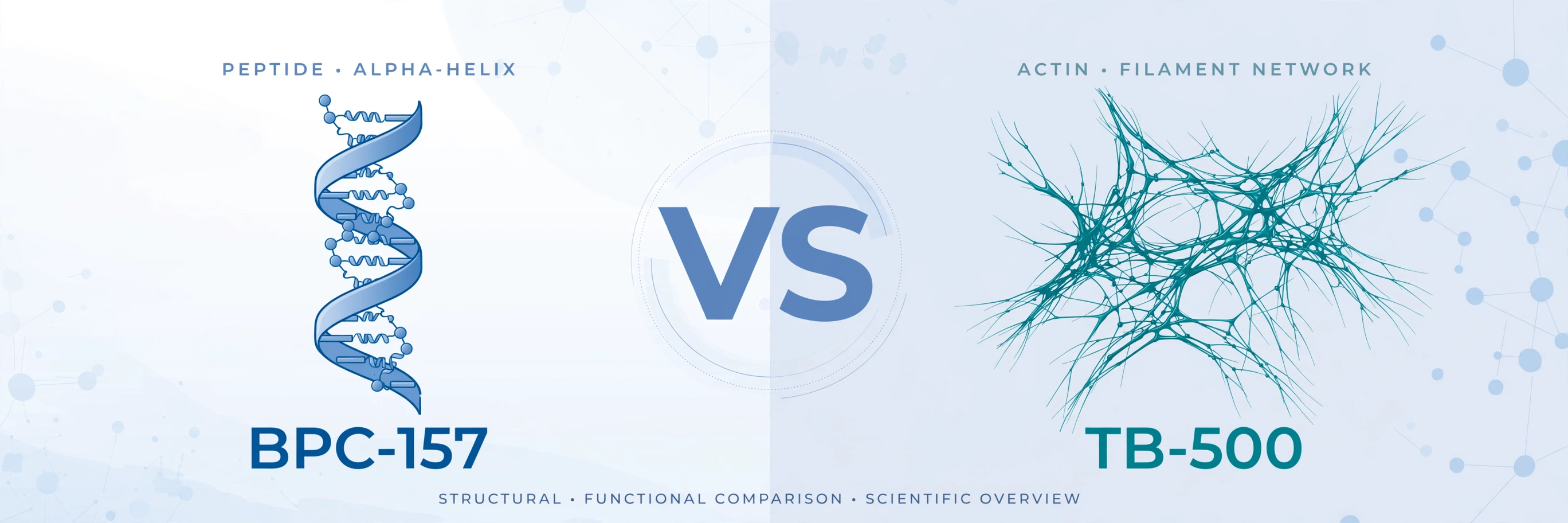
Researchers have described BPC-157 as a stable pentadecapeptide that remains intact in gastric fluid in laboratory studies — a property that made it a subject of interest in gastrointestinal research models. Its molecular structure has been studied for interactions with biomolecules involved in protective and regenerative processes in controlled research settings.
Gastrointestinal Research Models
In published preclinical studies, investigators have examined BPC-157 in models of gastric and intestinal injury, including models involving alcohol- and NSAID-related damage. Researchers have studied its relationship to antioxidant defense pathways, intracellular signaling, gastric mucosal integrity in laboratory models, and tight junction proteins associated with intestinal barrier function in vitro.
Published studies have also investigated BPC-157 in models of gastrointestinal wound processes, examining fibroblast activity, collagen-related pathways, and angiogenesis markers. Findings reported in the literature — including studies on ulcer models, fistula models, and surgical anastomosis models — come from controlled animal research and cannot be extrapolated to any use outside a laboratory.
Musculoskeletal Research Models
In published preclinical research, investigators have studied BPC-157 in joint and musculoskeletal models, including a temporomandibular joint osteoarthritis model in which researchers measured cartilage thickness and structural markers. Studies have examined its relationship to collagen, proteoglycans, tendon and ligament models, and muscle-tendon junction processes in animals.
All such findings are preclinical. No NUPEPS product is intended for, or should be used for, any joint, musculoskeletal, or pain-related purpose.
Research Context and Limitations
The BPC-157 literature is predominantly preclinical. Human data are limited, and findings from animal models do not predict outcomes in any other setting. BPC-157 remains a research compound, and its study continues in laboratory settings.
Conclusion
BPC-157 is an established research peptide in the published literature on tissue repair processes. NUPEPS supplies BPC-157 strictly as a research material for qualified laboratories, with third-party verification of identity and purity.
All products are intended strictly for laboratory research and in-vitro use only. Not for human or veterinary consumption, diagnostic, or therapeutic use. Products are not drugs, foods, cosmetics, or dietary supplements and may not be misbranded, misused, or mislabeled.
Frequently asked questions
Why is BPC-157 studied in gastrointestinal research models?
BPC-157 is a synthetic pentadecapeptide that researchers have described as remaining intact in gastric fluid in laboratory studies — a property that made it a subject of interest in gastrointestinal research. In published preclinical studies it has been examined in models of gastric and intestinal injury, including alcohol- and NSAID-related damage models, in relation to gastric mucosal integrity and tight junction proteins associated with intestinal barrier function in vitro.
What musculoskeletal models has BPC-157 been studied in?
In published preclinical research, investigators have studied BPC-157 in joint and musculoskeletal models, including a temporomandibular joint osteoarthritis model in which researchers measured cartilage thickness and structural markers, as well as tendon, ligament, and muscle-tendon junction models in animals. The article notes that all such findings are preclinical.
How mature is the evidence base for BPC-157?
The BPC-157 literature is predominantly preclinical and human data are limited, so findings from animal models do not predict outcomes in any other setting. BPC-157 has not received FDA approval and remains a research compound supplied strictly for laboratory research and in-vitro use only.
All products are intended strictly for laboratory research and in-vitro use only. Not for human or veterinary consumption, diagnostic, or therapeutic use. Products are not drugs, foods, cosmetics, or dietary supplements and may not be misbranded, misused, or mislabeled.
Related research products
Compounds discussed in this guide, available for laboratory research.