Peptide Information
BPC-157: Gastrointestinal and Joint Research Models
By NUPEPS Research TeamDecember 4, 2025

Research-Use Only
BPC-157 (Body Protection Compound-157) is a synthetic pentadecapeptide investigated in published preclinical research on tissue repair processes. All NUPEPS products are supplied strictly for laboratory research and in-vitro use only. Not for human or veterinary consumption, diagnostic, or therapeutic use. These products are not pharmaceuticals and have not received approval from the U.S. Food and Drug Administration (FDA).
Overview of BPC-157 in the Literature
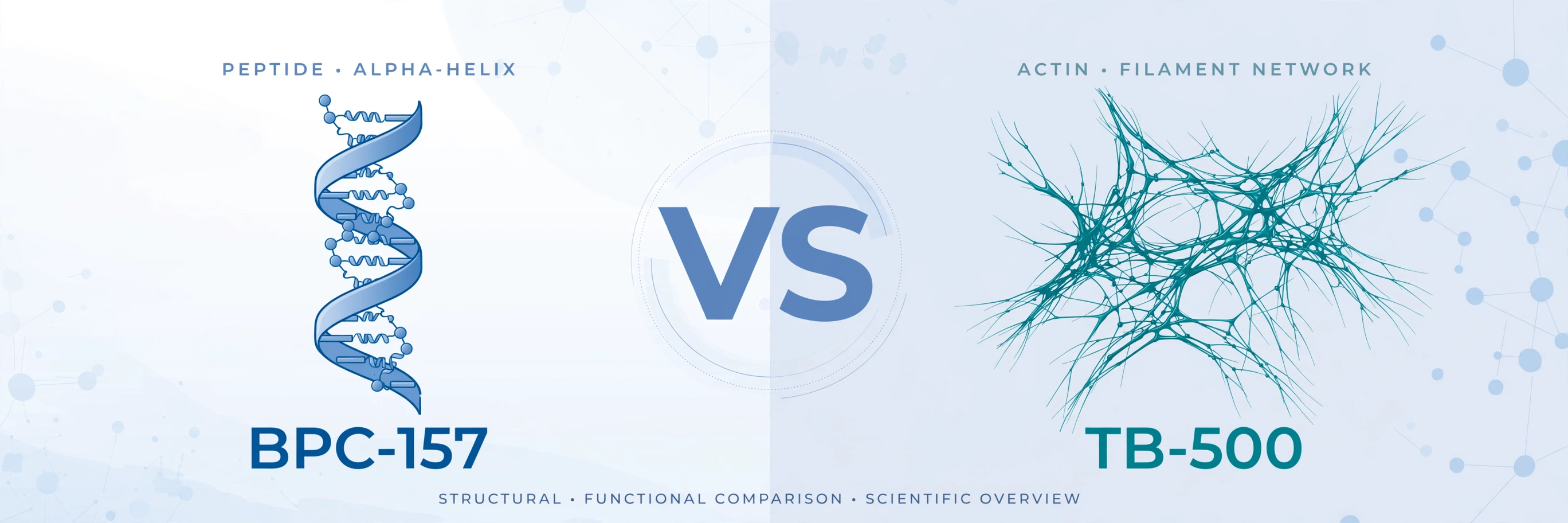
Researchers have described BPC-157 as a stable pentadecapeptide that remains intact in gastric fluid in laboratory studies — a property that made it a subject of interest in gastrointestinal research models. Its molecular structure has been studied for interactions with biomolecules involved in protective and regenerative processes in controlled research settings.
Gastrointestinal Research Models
In published preclinical studies, investigators have examined BPC-157 in models of gastric and intestinal injury, including models involving alcohol- and NSAID-related damage. Researchers have studied its relationship to antioxidant defense pathways, intracellular signaling, gastric mucosal integrity in laboratory models, and tight junction proteins associated with intestinal barrier function in vitro.
Published studies have also investigated BPC-157 in models of gastrointestinal wound processes, examining fibroblast activity, collagen-related pathways, and angiogenesis markers. Findings reported in the literature — including studies on ulcer models, fistula models, and surgical anastomosis models — come from controlled animal research and cannot be extrapolated to any use outside a laboratory.
Musculoskeletal Research Models
In published preclinical research, investigators have studied BPC-157 in joint and musculoskeletal models, including a temporomandibular joint osteoarthritis model in which researchers measured cartilage thickness and structural markers. Studies have examined its relationship to collagen, proteoglycans, tendon and ligament models, and muscle-tendon junction processes in animals.
All such findings are preclinical. No NUPEPS product is intended for, or should be used for, any joint, musculoskeletal, or pain-related purpose.
Research Context and Limitations
The BPC-157 literature is predominantly preclinical. Human data are limited, and findings from animal models do not predict outcomes in any other setting. BPC-157 remains a research compound, and its study continues in laboratory settings.
Conclusion
BPC-157 is an established research peptide in the published literature on tissue repair processes. NUPEPS supplies BPC-157 strictly as a research material for qualified laboratories, with third-party verification of identity and purity.
All products are intended strictly for laboratory research and in-vitro use only. Not for human or veterinary consumption, diagnostic, or therapeutic use. Products are not drugs, foods, cosmetics, or dietary supplements and may not be misbranded, misused, or mislabeled.
Frequently asked questions
Is BPC-157: Gastrointestinal and Joint Research Models for human use?
No. All compounds discussed in this guide are strictly for laboratory research use only. Not for human or veterinary use.
Where can I find the Certificate of Analysis?
Certificates of Analysis are available in our COA library. Each batch is third-party tested for purity and identity.
How should research compounds be stored?
Store according to the vial label instructions. Generally, lyophilized compounds should be kept in a cool, dry place away from light. Refer to the specific product documentation for details.
All products are intended strictly for laboratory research and in-vitro use only. Not for human or veterinary consumption, diagnostic, or therapeutic use. Products are not drugs, foods, cosmetics, or dietary supplements and may not be misbranded, misused, or mislabeled.