Skin research has come a long way in the past few decades, and one compound continues to stand out for its remarkable biological profile: the GHK-Cu peptide.
What Is GHK-Cu?
GHK-Cu is a small tripeptide composed of three amino acids, glycine, histidine, and lysine, bound to a copper (Cu²⁺) ion. It was first identified in human plasma in the early 1970s by Dr. Loren Pickart, who observed that it appeared to support tissue repair activity. Since then, it has been the subject of extensive scientific investigation.
Copper is an essential trace mineral involved in numerous enzymatic processes in the human body. When bound to the GHK peptide sequence, it forms a stable complex that is both biologically active and highly compatible with skin tissue.
Key Areas of GHK-Cu Peptide Research
Modern GHK-Cu peptide research has focused on several interconnected biological pathways. Here are the primary areas scientists have studied:
- Collagen and Extracellular Matrix Regulation – Additionally, studies suggest that GHK-Cu may influence the expression of collagen types I and III, as well as elastin and glycosaminoglycans, all of which are essential structural components of healthy skin.
- Antioxidant Activity – GHK-Cu has been studied for its potential to help neutralize free radicals and reduce oxidative stress markers in skin cell models.
- Anti-Inflammatory Properties – Additionally, research has explored the peptide’s apparent ability to modulate inflammatory signaling pathways, including interleukin activity and TNF-alpha expression.
- Wound Healing Indicators – Preclinical studies have investigated GHK-Cu’s influence on fibroblast migration, proliferation, and the remodeling of damaged tissue.
- Gene Expression Modulation – Perhaps most notably, some researchers have found that GHK-Cu may affect the expression of hundreds of human genes involved in tissue remodeling, immune response, and DNA repair.
These findings make GHK-Cu one of the most scientifically intriguing peptides in dermatological research today.
GHK-Cu in Cosmetic Peptide Science
Peptides have become central ingredients in modern cosmetic formulation. Among them, GHK-Cu occupies a distinct position due to its copper-chelating properties and multifaceted biological activity. Researchers classify it as a signal peptide, a category that communicates with skin cells and influences their behavior.
Cosmetic formulations that include peptides like GHK-Cu typically target research applications related to skin aging, elasticity assessment, and texture modeling. Researchers often evaluate this compound in serums, emulsions, and specialized topical delivery systems used in laboratory settings.
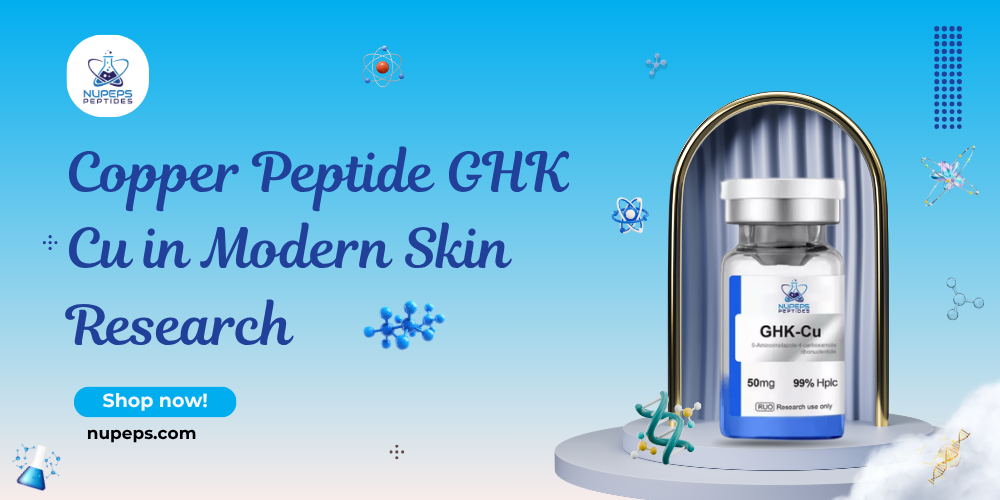
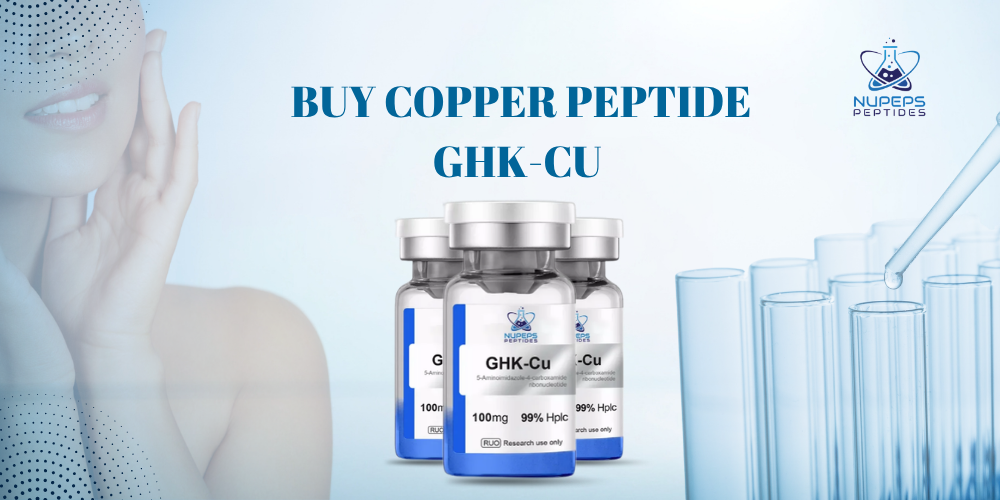
For those looking to source high-purity materials for in vitro and preclinical investigations, it is now possible to buy copper peptide GHK-Cu from specialized suppliers offering research-grade compounds. Additionally, when selecting a supplier, researchers should look for documented purity levels, appropriate certifications, and clear usage guidelines.
You can explore a range of cosmetic peptides, including GHK-Cu at Nupeps Peptides.
For research use only. Not for human consumption. No medical or therapeutic claims are made.
Stability and Formulation Considerations
One practical challenge in GHK-Cu research involves stability. The peptide is sensitive to pH, temperature, and oxidation. Researchers and formulators working with this compound typically consider the following:
- Maintaining formulations at a slightly acidic pH (4.5–6.0)
- Avoiding prolonged exposure to heat and light during storage
- Using chelating agents carefully to avoid competing with the copper ion
- Assessing bioavailability through appropriate in vitro skin penetration models
These formulation challenges are part of why GHK-Cu peptide research remains an active area; optimizing delivery systems is as important as understanding the peptide’s intrinsic activity.
Ready To Order Research-Grade GHK-Cu?
The science surrounding GHK-Cu continues to evolve, with researchers uncovering new dimensions of its biological activity year after year. From collagen regulation to gene expression modulation, this copper peptide represents one of the most compelling research subjects in modern cosmetic science.
Whether you are exploring molecular mechanisms in a laboratory setting or evaluating peptide ingredients for formulation research, GHK-Cu remains a compound well worth understanding in depth.
Note: This product is for research use only. Do not use it for human consumption. We do not make any medical or therapeutic claims.
Frequently Asked Questions
Q1: What does GHK-Cu stand for, and what makes it unique?
GHK-Cu stands for glycyl-L-histidyl-L-lysine copper complex. Its uniqueness lies in the combination of a naturally occurring human tripeptide with a copper ion, which together may influence multiple biological pathways related to skin tissue, including extracellular matrix remodeling, antioxidant defense, and gene expression modulation.
Q2: Where can researchers buy copper peptide GHK-Cu for laboratory use?
Research-grade GHK-Cu is available from specialized peptide suppliers. When you look to buy copper peptide GHK-Cu, ensure the supplier provides certificates of analysis (CoA), documented purity levels (typically ≥98%), and clear labeling for research use only. NUPEPS Peptides offers a curated selection of cosmetic peptides for scientific applications at nupeps.com/cosmetic-peptides.
Q3: Do studies show that GHK-Cu is safe for cosmetic research models?
In vitro and preclinical studies have generally reported favorable tolerability profiles for GHK-Cu in laboratory settings. However, all research applications should follow proper safety protocols. As with any bioactive compound, researchers should review available literature, work under appropriate regulatory frameworks, and adhere to institutional guidelines for handling peptide compounds.