
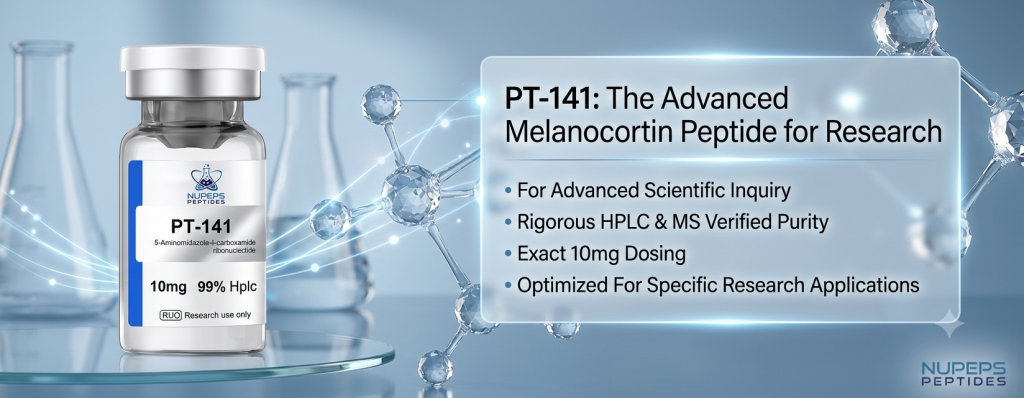
Understanding PT-141 Peptide: A Research Guide to Purity and Laboratory Quality
As peptide science continues to evolve, researchers are investigating a growing number of compounds involved in cellular communication and biological signaling. Among these is PT-141, a research peptide that has attracted scientific interest because of its unique mechanism and ongoing laboratory investigation.
If you’re evaluating PT-141 peptide products for research purposes, understanding laboratory quality, analytical testing, and manufacturing standards is just as important as understanding the published science. Whether you’re reviewing scientific literature or selecting research materials, choosing products supported by comprehensive quality documentation can help improve confidence in experimental work.
This guide explains what PT-141 is, why it continues to be studied, and how researchers evaluate product quality before selecting research materials.
What Is PT-141 Peptide?
PT-141 peptide, also known in the scientific literature as bremelanotide, is a synthetic peptide that has been investigated for its interaction with melanocortin receptors. Researchers continue exploring its biological activity in laboratory settings to better understand receptor signaling and related physiological pathways.
Unlike many experimental compounds that remain in the early stages of investigation, PT-141 has generated a substantial body of scientific literature. Even so, ongoing laboratory research continues to expand understanding of its mechanisms, biological activity, and potential research applications.
Published studies indexed through the National Center for Biotechnology Information (NCBI) continue to contribute to scientific knowledge regarding melanocortin receptor biology and peptide signaling.
Why Researchers Continue Studying PT-141
Interest in PT-141 stems from its interaction with biological signaling pathways that differ from many other research peptides.
Current laboratory investigations include areas such as:
- Receptor signaling
- Peptide biology
- Neurobiology research
- Cellular communication
- Molecular interactions
- Experimental pharmacology
These investigations remain focused on understanding biological mechanisms rather than establishing new clinical applications. Researchers continue evaluating findings through controlled laboratory and clinical studies.
Why Laboratory Quality Matters
Regardless of the peptide being studied, research quality plays a significant role in generating reliable experimental results.
Researchers typically evaluate:
- Batch consistency
- Analytical purity
- Manufacturing documentation
- Product identity
- Storage recommendations
- Quality control procedures
Using well-characterized research materials helps reduce variability while supporting reproducibility across laboratory studies.
Understanding Purity Standards
High-quality research begins with well-documented materials.
Before selecting PT-141 peptide, researchers often review documentation that includes:
- Certificate of Analysis (COA)
- High Performance Liquid Chromatography (HPLC) purity reports
- Liquid Chromatography Mass Spectrometry (LC MS) verification
- Batch-specific analytical testing
- Manufacturing specifications
These quality measures help verify product identity and provide researchers with greater confidence in experimental consistency.
The Role of Purity Peptide Labs
When researchers discuss purity peptide labs, they are generally referring to laboratories and manufacturers that prioritize rigorous analytical testing and transparent quality documentation.
Reliable research laboratories typically emphasize:
- Independent analytical testing
- Standardized manufacturing processes
- Batch traceability
- Transparent documentation
- Secure packaging
- Appropriate storage guidance
Working with suppliers that maintain consistent quality standards helps support reproducible laboratory research.
Choosing a Reliable Peptide Supplier
Selecting a peptide supplier involves more than comparing product availability.
Before purchasing research materials, consider whether the supplier provides:
- Batch-specific Certificates of Analysis
- Verified HPLC purity testing
- LC MS confirmation
- Clearly documented specifications
- Consistent manufacturing practices
- Technical support
- Storage recommendations
Reliable documentation allows researchers to evaluate product quality before incorporating materials into laboratory studies.
PT-141 Compared With Other Research Peptides
Researchers select peptides based on the objectives of each study rather than assuming one compound is universally appropriate.
| Research Consideration | PT-141 Peptide | Other Research Peptides |
| Primary focus | Receptor biology research | Varies by compound |
| Research applications | Biological signaling studies | Depends on study design |
| Product evaluation | COA and analytical testing | COA and analytical testing |
| Quality requirements | Laboratory-grade documentation | Laboratory-grade documentation |
| Supplier selection | Verified testing and consistency | Verified testing and consistency |
The selection process should always be guided by research objectives, published scientific literature, and product quality.
Best Practices for Selecting Research Peptides
Choosing laboratory-grade peptide materials begins with asking the right questions.
Consider whether the supplier offers:
- Transparent quality documentation
- Independent purity testing
- Batch-specific Certificates of Analysis
- Consistent manufacturing practices
- Technical support for researchers
- Clearly labeled packaging
- Recommended storage conditions
Taking time to evaluate these factors helps support consistent research outcomes.
Current Research Perspective
Scientific understanding of PT-141 continues to evolve.
Published laboratory and clinical studies continue investigating its biological mechanisms, receptor interactions, and pharmacological characteristics. Like many research peptides, PT-141 remains an active area of scientific investigation, with additional studies needed to expand current knowledge.
Resources such as PubMed, NCBI, and the National Institutes of Health (NIH) provide access to peer-reviewed research that helps researchers stay informed about new developments.
Frequently Asked Questions
What is PT-141 peptide?
PT-141 peptide is a synthetic research peptide studied for its interaction with melanocortin receptors and related biological signaling pathways.
Why is PT-141 still being researched?
Researchers continue studying PT-141 to better understand receptor biology, cellular signaling, and other biological mechanisms through controlled laboratory and clinical investigations.
What should researchers look for when selecting PT-141 peptide?
Researchers should evaluate product purity, Certificates of Analysis, HPLC testing, LC MS verification, manufacturing consistency, and supplier documentation before selecting research materials.
What are purity peptide labs?
Purity peptide labs generally refer to laboratories or manufacturers that emphasize analytical testing, quality control, and transparent documentation for research peptide products.
How do I choose a reliable peptide supplier?
Look for suppliers that provide batch-specific quality documentation, verified purity testing, manufacturing transparency, and consistent laboratory standards.
Conclusion
Interest in PT-141 continues to grow as researchers investigate peptide biology, receptor signaling, and cellular communication through carefully designed laboratory studies. While scientific understanding continues to evolve, selecting high-quality research materials remains essential for generating reliable and reproducible results.
If you’re evaluating PT-141 peptide products, choose suppliers that prioritize analytical testing, verified purity, and transparent quality documentation. Working with trusted purity peptide labs and reliable research suppliers helps support confidence in laboratory research while maintaining high scientific standards.
Ready to support your next research project? Interested in exploring additional research compounds? Browse NUPEPS’ Cosmetic Peptides collection to discover laboratory-grade peptides supported by verified purity, batch-specific quality documentation, and rigorous analytical testing.
Research Use Only: Products supplied by NUPEPS are intended exclusively for laboratory research purposes. They are not intended for human consumption or for diagnosing, treating, curing, or preventing any disease.