Sign up to our newsletter for 20% OFF
We use essential cookies to keep the store running. With your permission, we'll also use analytics and marketing cookies to understand visits and improve how we reach researchers. You can change your mind anytime via “Cookie settings” in the footer.
Matched multi-compound vials for combined-pathway laboratory research. Every batch verified for identity and 99%+ purity by HPLC and mass spectrometry.
8 products
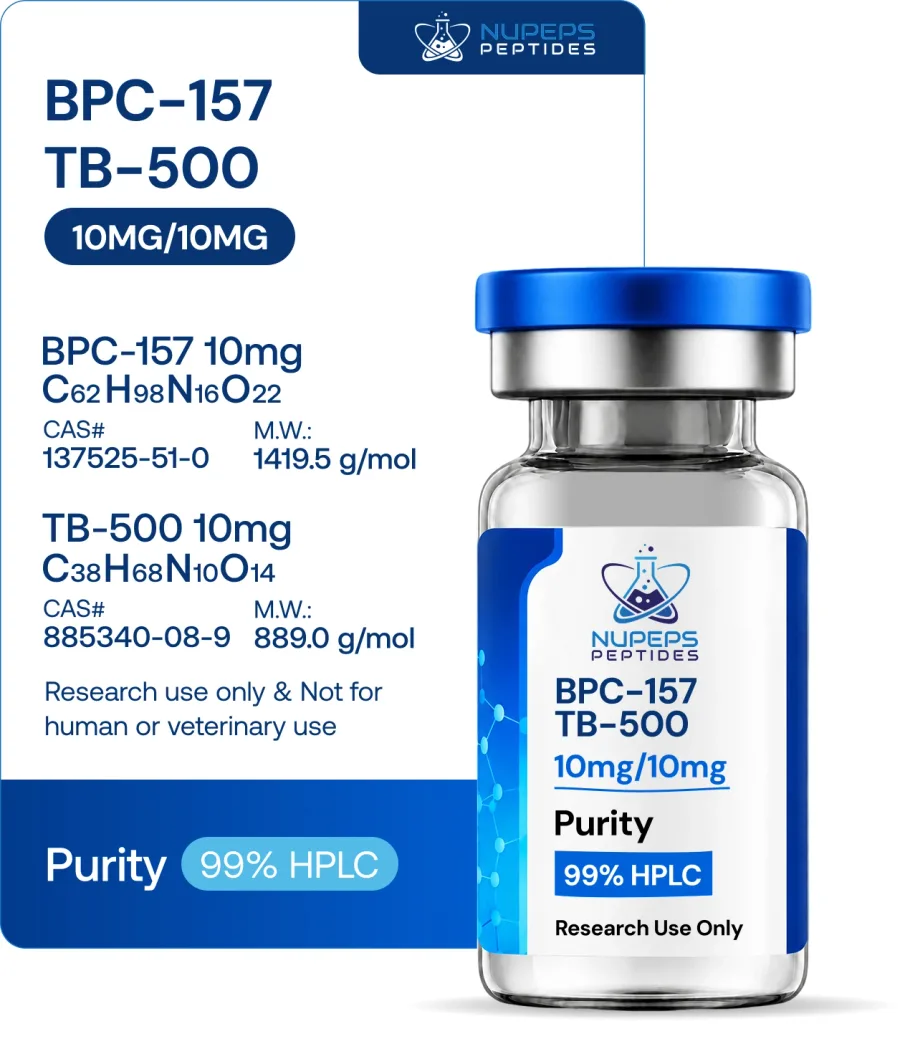
10MG + 10MG / vial · ≥ 99% purity
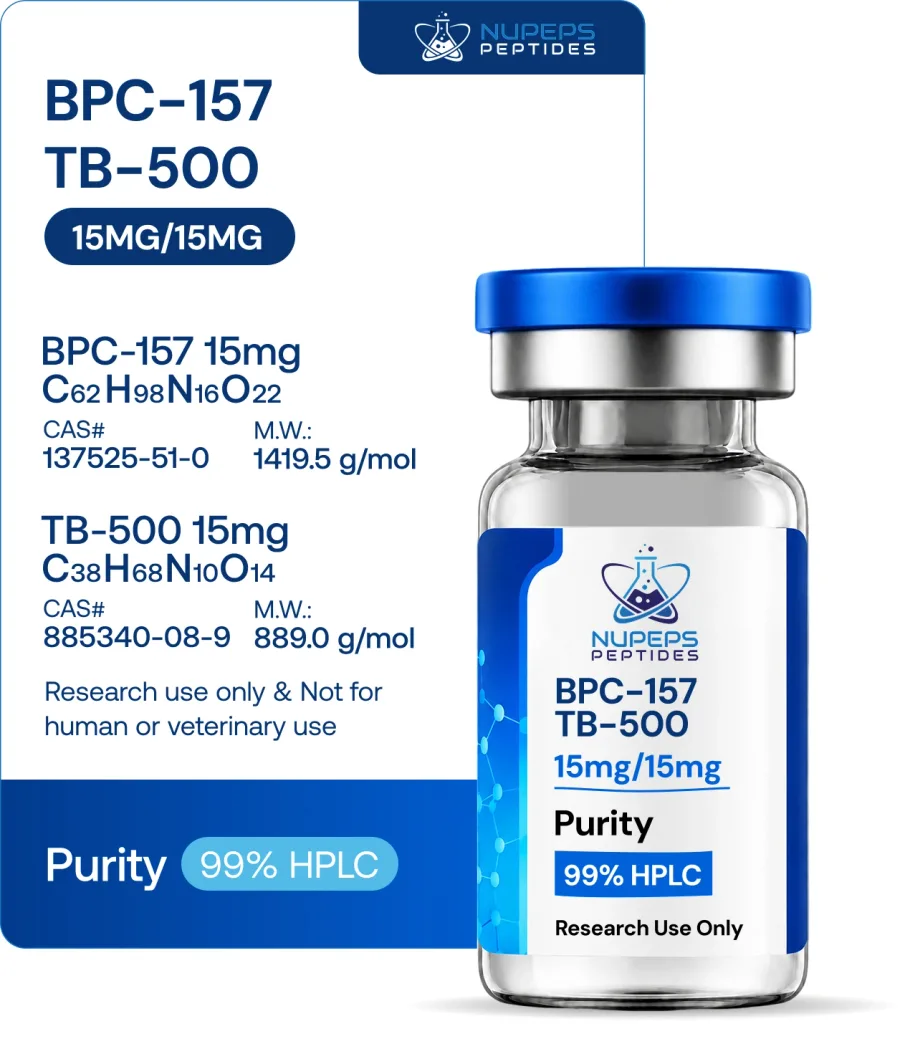
15MG + 15MG / vial · ≥ 99% purity
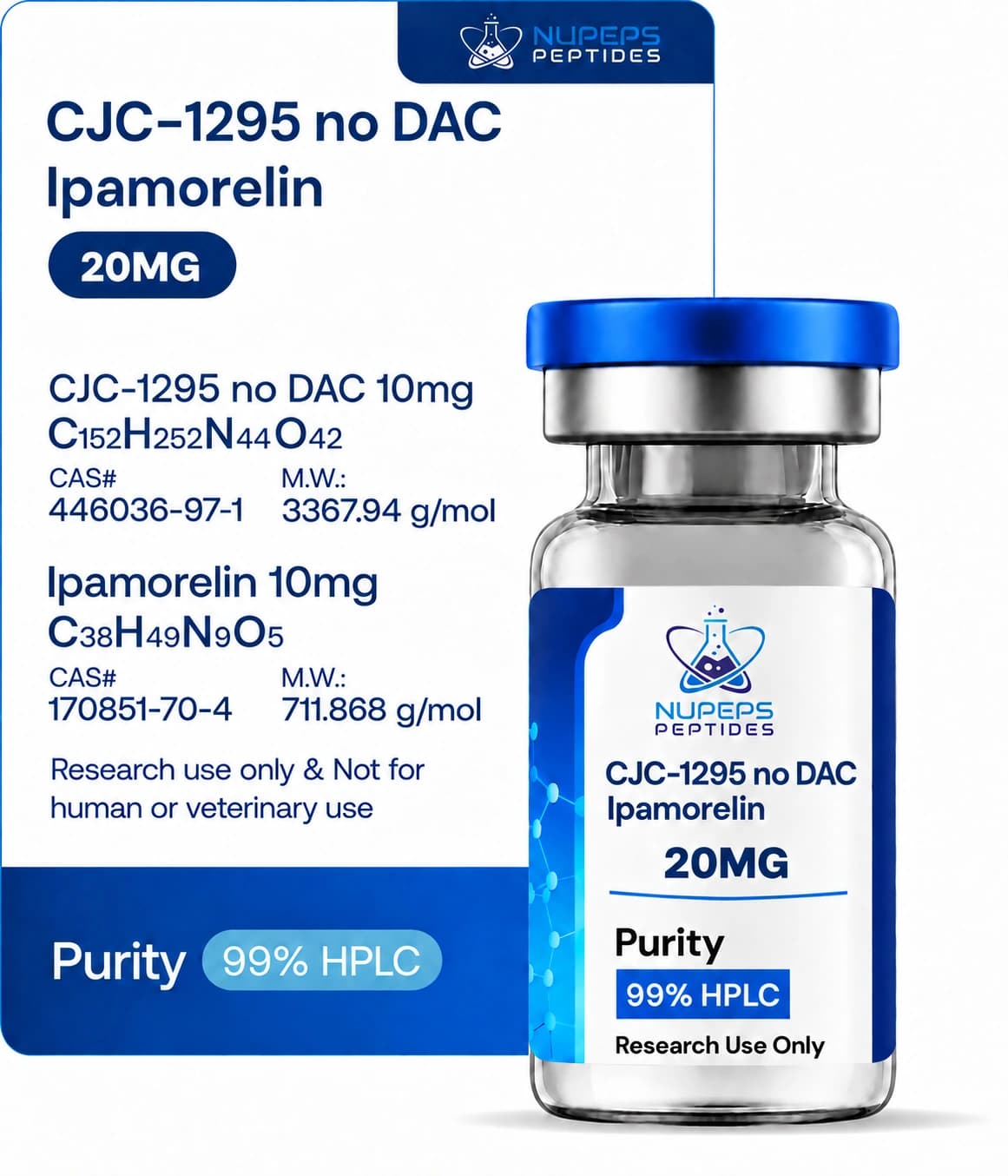
20MG / vial · ≥ 99% purity
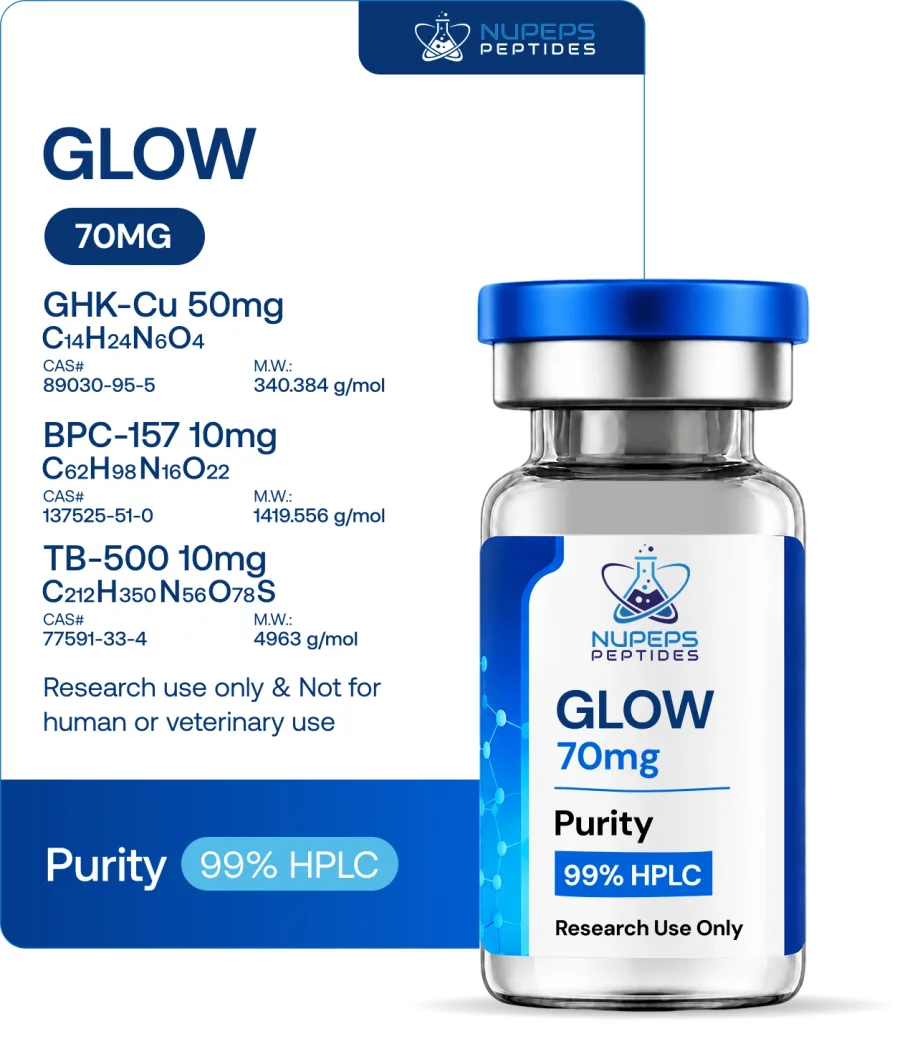
70MG / vial · ≥ 99% purity
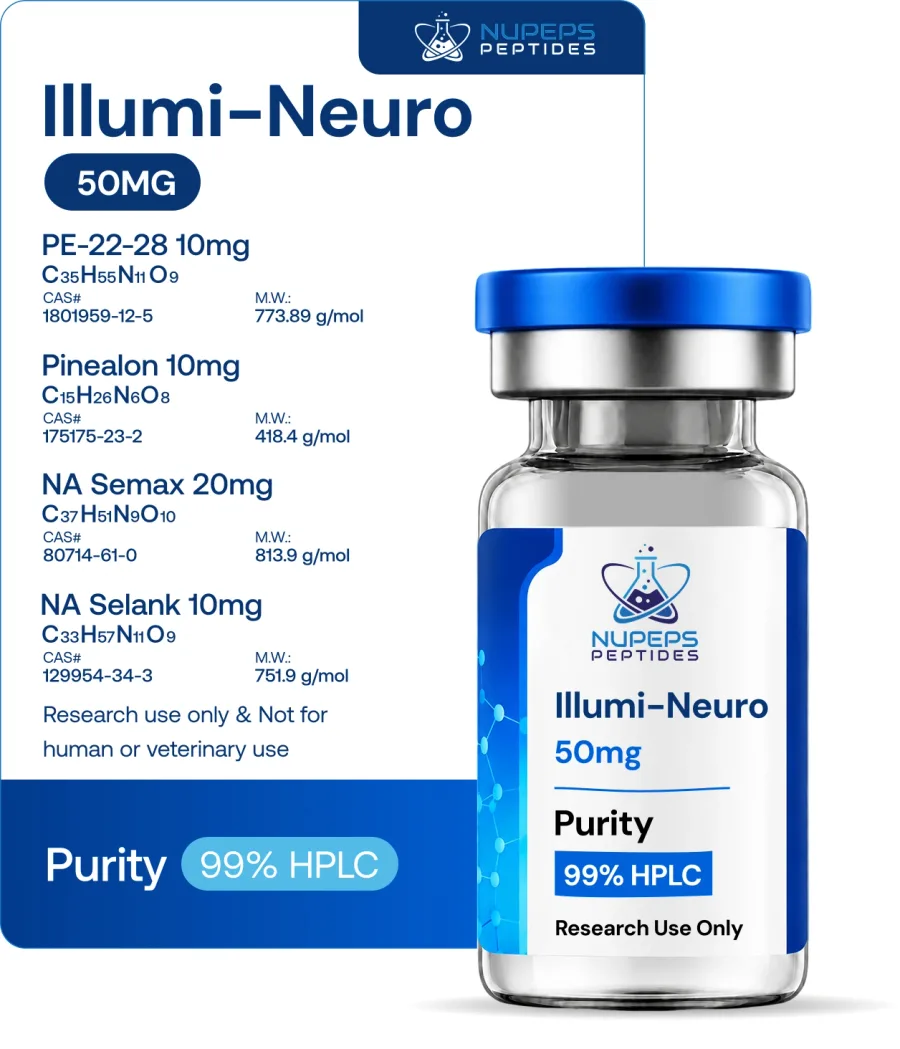
50MG / vial · ≥ 99% purity
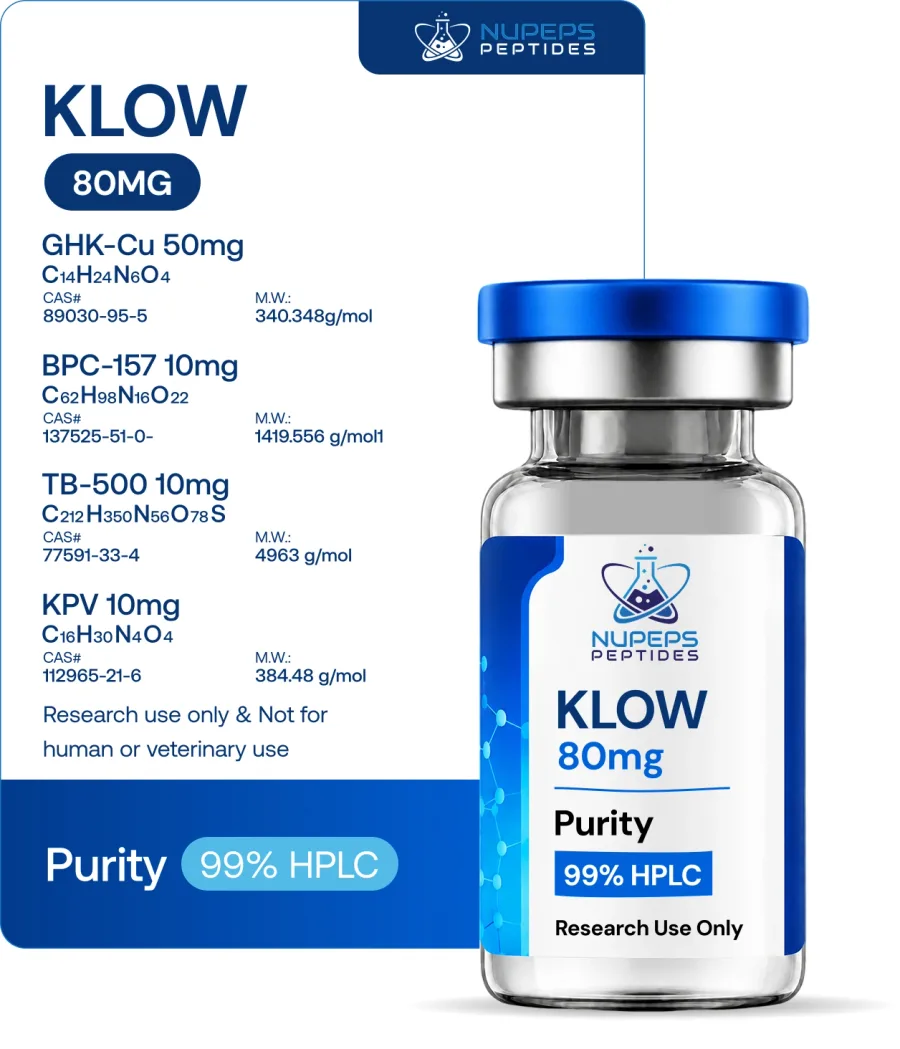
80MG / vial · ≥ 99% purity
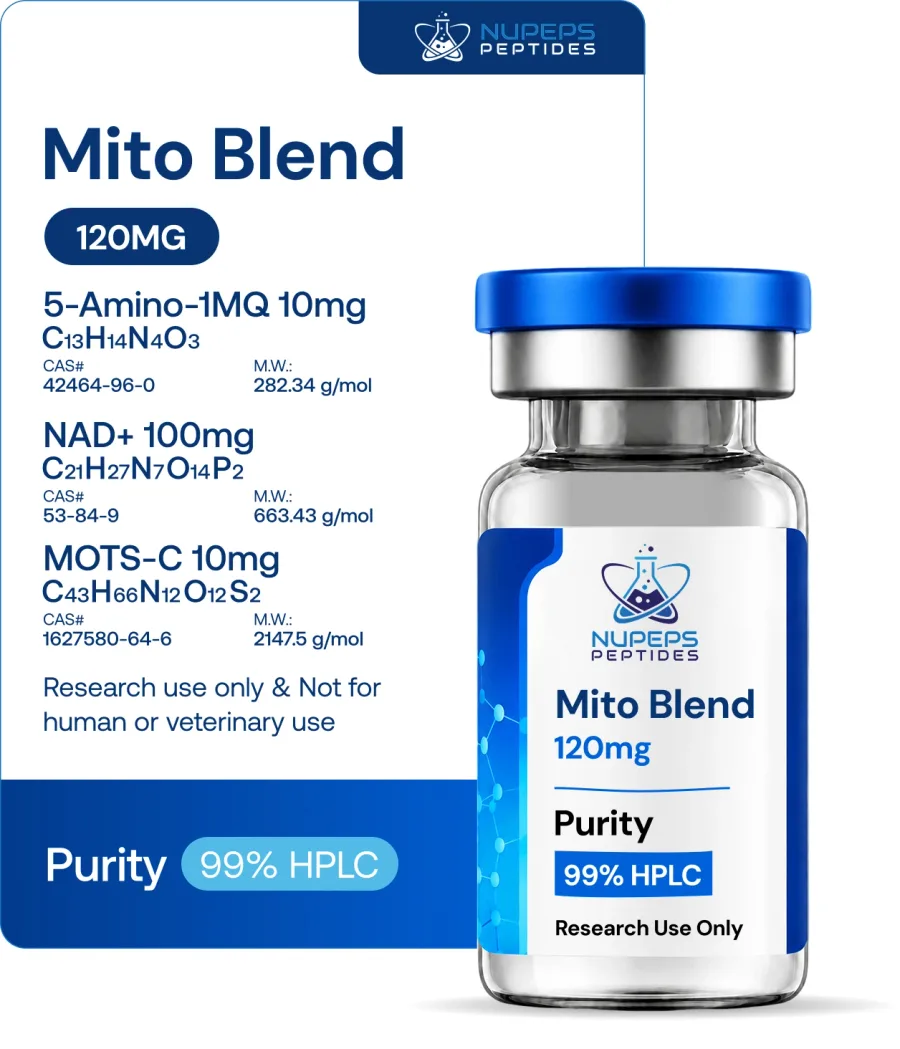
120MG / vial · ≥ 99% purity
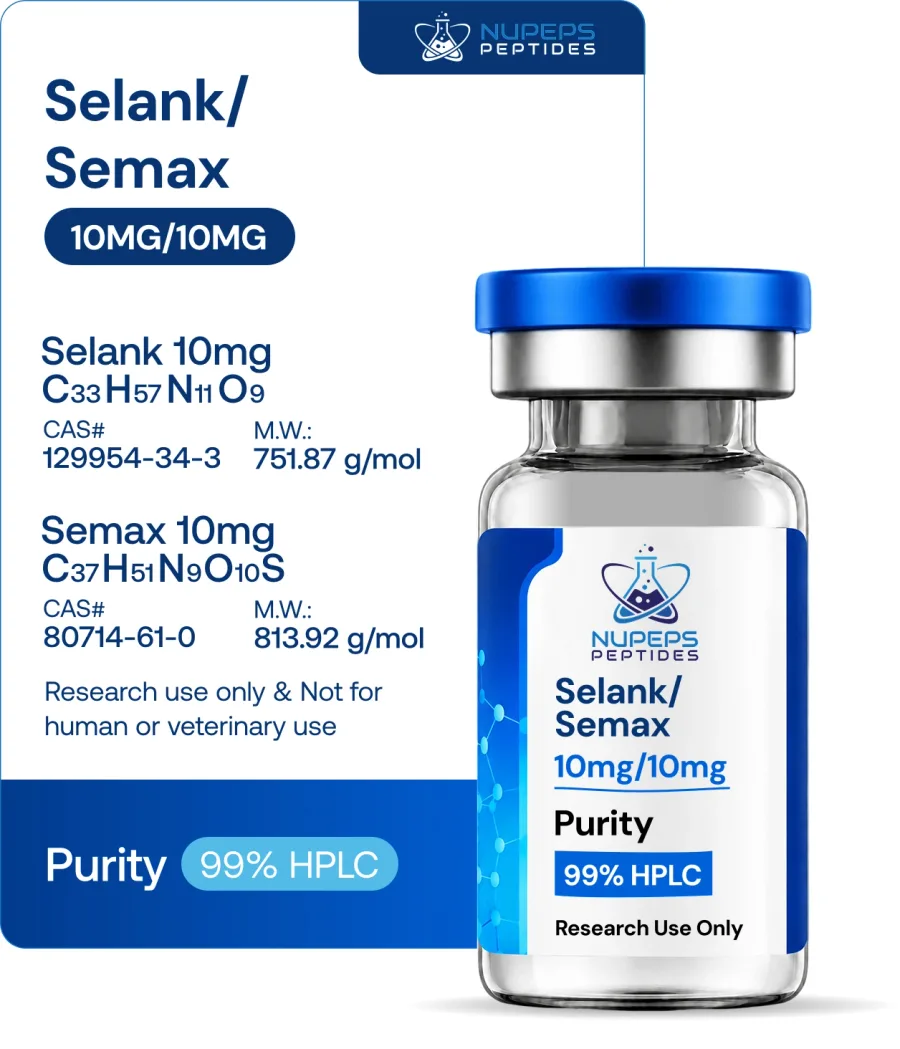
20MG / vial · ≥ 99% purity
A peptide blend places two or more defined research compounds in a single lyophilized vial, so a laboratory can work with a fixed combination without sourcing and combining separate materials itself. This category holds the NUPEPS PEPTIDES blend range: KLOW 80MG and GLOW 70MG, CJC-1295 no DAC + Ipamorelin 20MG, Selank + Semax 20MG, Mito Blend 120MG, and Illumi-Neuro 50MG, alongside two further combination SKUs in the grid above. Each blend is built around a stated research rationale — compounds studied in the same pathway, or in complementary pathways that research designs examine together.
The first comparison is compositional. KLOW and GLOW share a three-compound core and differ by a single additional component and by total fill (80 mg versus 70 mg); our Klow vs Glow comparison works through what that one-component difference means for study design, including the trade-off between a broader combined profile and the simpler attribution of outcomes to individual compounds. The second comparison is mechanistic: CJC-1295 no DAC + Ipamorelin pairs a GHRH-receptor analog with a ghrelin-receptor agonist — two different receptors on the same pituitary cells — and our CJC-1295 vs Ipamorelin comparison explains why that receptor-level complementarity is the pairing's research rationale. Selank + Semax, Mito Blend, and Illumi-Neuro apply the same logic to neuropeptide and mitochondrial research areas.
Verification matters more, not less, when several compounds share a vial. A blended average purity figure is not enough: researchers should look for HPLC purity reported per peptide, mass spectrometry confirmation of each component's identity, and a label that states both the total fill weight and the composition of the blend. Every NUPEPS PEPTIDES blend batch is documented this way, and our guide to how peptide testing labs verify purity and identity sets out the checks in full.
All products in this category are supplied strictly for laboratory and in-vitro research use only. Not for human or veterinary use.