Peptide Information
Tesamorelin and Fat Metabolism: A Review of the Published Research
4 décembre 2025

Research-Use Only
Tesamorelin is a synthetic analogue of growth hormone–releasing hormone (GHRH) investigated in published clinical and preclinical research on fat metabolism. All NUPEPS products are supplied strictly for laboratory research and in-vitro use only. Not for human or veterinary consumption, diagnostic, or therapeutic use.
How Tesamorelin Is Studied: Mechanisms in the Literature
1. The GH–IGF-1 Axis
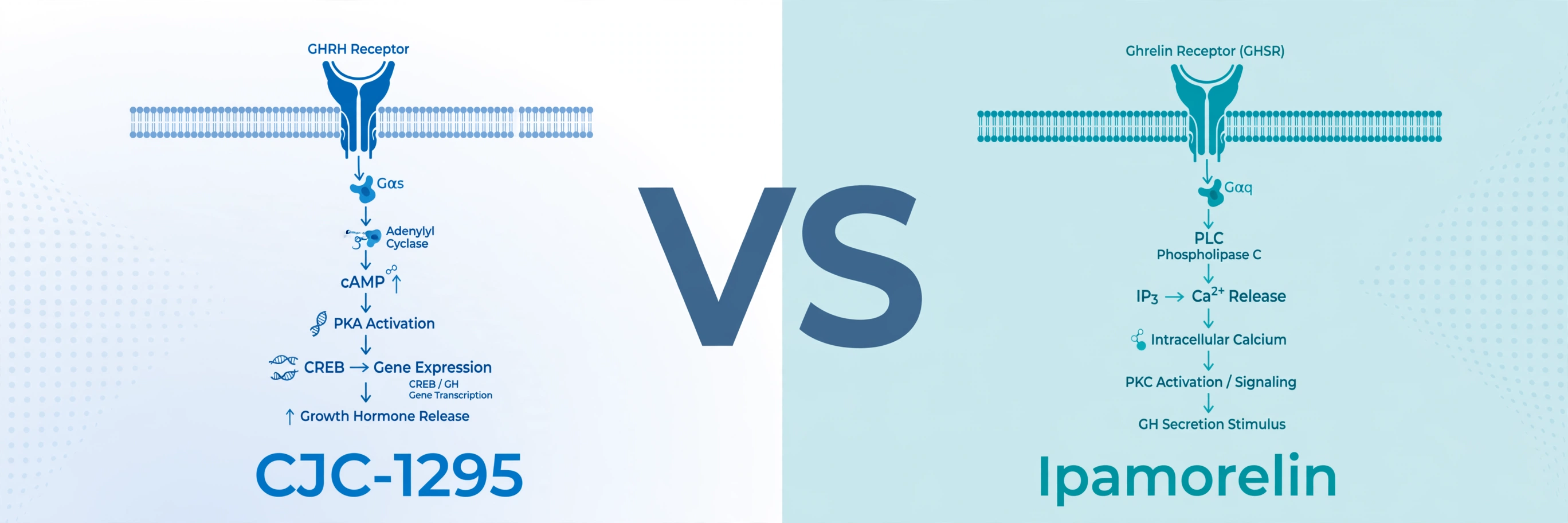
Published studies describe Tesamorelin binding to GHRH receptors in the anterior pituitary, stimulating growth hormone (GH) release through downstream signaling pathways such as JAK-STAT. Circulating GH then stimulates hepatic production of insulin-like growth factor-1 (IGF-1), a key mediator studied in fat metabolism research.
Researchers have investigated IGF-1 in connection with:
- adipocyte function in laboratory models
- fatty acid uptake and oxidation pathways
- intracellular lipid accumulation in vitro
2. Adipocyte Metabolism Pathways
In published research, investigators have examined Tesamorelin in relation to lipolysis — the breakdown of triglycerides into glycerol and fatty acids — including the involvement of hormone-sensitive lipase (HSL) and cAMP–PKA signaling in laboratory models. Researchers have also studied its relationship to fatty acid oxidation enzymes, including carnitine palmitoyltransferase-1 (CPT1), ACC2, and FATP1.
3. Lipid Metabolism–Related Gene Expression
Published studies have reported investigations into Tesamorelin's relationship with adipogenic transcription factors such as PPARγ and C/EBPα, and with lipid transport–related genes including ApoB and ApoA-I. These findings come from research settings and gene-expression analyses, not from product claims.
What the Published Clinical Research Investigated
Tesamorelin has been the subject of published clinical trials, including Phase III studies, in which investigators measured outcomes such as visceral adipose tissue (VAT) by imaging, hepatic fat fraction, and waist circumference in enrolled study participants. Results reported in the literature belong to those controlled research settings and are summarized here for informational purposes only — they are not statements about any NUPEPS product and do not imply any therapeutic use.
Research Context and Limitations
Published trials enrolled specific study populations under controlled protocols; findings cannot be generalized beyond those settings. Peptide research on fat metabolism remains an active field, and the mechanisms described above are subjects of ongoing investigation.
Conclusion
Tesamorelin is an established research compound in the published literature on GHRH signaling and fat metabolism. NUPEPS supplies Tesamorelin strictly as a research material for qualified laboratories, with third-party verification of identity and purity.
All products are intended strictly for laboratory research and in-vitro use only. Not for human or veterinary consumption, diagnostic, or therapeutic use. Products are not drugs, foods, cosmetics, or dietary supplements and may not be misbranded, misused, or mislabeled.
All products are intended strictly for laboratory research and in-vitro use only. Not for human or veterinary consumption, diagnostic, or therapeutic use. Products are not drugs, foods, cosmetics, or dietary supplements and may not be misbranded, misused, or mislabeled.
Related research products
Compounds discussed in this guide, available for laboratory research.