
Research Guides
Best Mitochondrial Peptides for Research (2026)
By NUPEPS Research TeamNovember 20, 2026
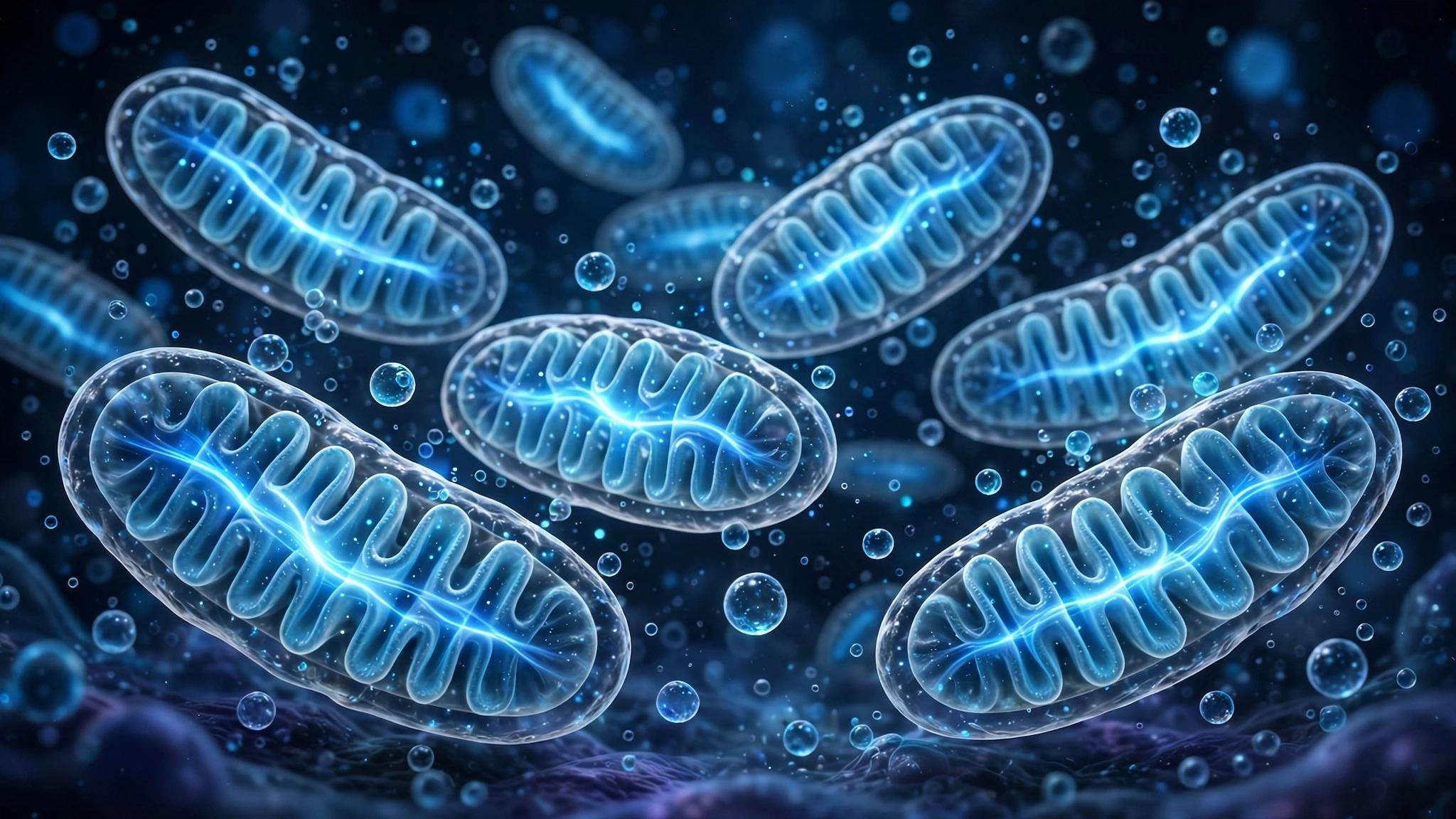
The mitochondrial research material with the deepest published evidence record is SS-31, also called elamipretide, a cardiolipin-binding tetrapeptide studied in controlled human research programs, followed by MOTS-c, a 16-amino-acid mitochondrial-derived peptide known mainly from animal and cell work, then the coenzyme NAD+, and finally Mito Blend, a blend with no published study of its own. The ranking criterion is depth of published evidence, not promised effect.
That criterion matters here, because the four entries are not the same kind of thing. Two are single peptides, one is a coenzyme that is not a peptide at all, and one is a blend whose components were each studied separately. This guide sets their targets and records side by side, states the limits of each record, and explains how a laboratory verifies each material.
How Were These Entries Selected and Ranked?
The ranking asks one question: how much published evidence, of what quality, exists for a laboratory choosing a mitochondrial research compound? Controlled human research weighs most, then regulatory history for a pharmaceutical version of the same molecule, then observational human data, then animal studies, then cell work. Popularity was excluded entirely.
Only materials in the NUPEPS PEPTIDES research catalog are listed, and only materials whose primary literature is mitochondrial research: inner-membrane biology, mitochondrial signaling, cellular energy sensing, or NAD+ metabolism. A compound earns a higher place by having a deeper and more direct record for the material itself, not by borrowing depth from a related molecule or a precursor.
That directness rule shapes the lower half of the list. NAD+ sits inside one of the largest literatures in cell biology, yet much of it studies the molecule the body makes itself, or its precursors, rather than supplied NAD+ as a material. Mito Blend ranks last for a simpler reason: a blend inherits no evidence of its own, however well studied its separate components may be.
The Four Entries at a Glance
| Rank | Entry | Class | Target or pathway | Evidence depth | Research status |
|---|---|---|---|---|---|
| 1 | SS-31 (elamipretide) | Cardiolipin-binding tetrapeptide | Cardiolipin on the inner mitochondrial membrane | Deepest record here: membrane studies, extensive animal work, and controlled human research programs | Research material only; separate pharmaceutical product received accelerated approval in September 2025 for Barth syndrome |
| 2 | MOTS-c | 16-amino-acid mitochondrial-derived peptide | Folate and purine pathway, leading to AMPK activation | Landmark 2015 discovery paper; mostly animal and cell work, plus observational human data | Research compound only; no controlled human intervention trial published |
| 3 | NAD+ | Coenzyme — not a peptide | Redox reactions and NAD+-consuming enzymes, including sirtuins and CD38 | Very large biology literature, largely indirect for supplied NAD+ itself; intervention record mainly studies precursors | Research material only; included because it is catalogued and studied alongside mitochondrial peptides |
| 4 | Mito Blend 120MG | Three-component blend | Combines NAD+, MOTS-c, and NNMT pathways in one material | No published study of the blend itself; evidence belongs to its separate components only | Research blend only; component amounts are NAD+ 100MG, MOTS-c 10MG, and 5-Amino-1MQ 10MG |
Read as a set, the table shows why this category needs its labels kept visible. The top entry is a single peptide with a membrane target and a long development record. The second is a signaling peptide encoded by mitochondrial DNA itself. The third is a coenzyme, and the fourth is a combination. Treating all four as interchangeable peptides would misstate what each one is.
1. SS-31 — What Does the Research Record Show?
SS-31, known in pharmaceutical development as elamipretide, is a synthetic tetrapeptide with the sequence D-Arg-Dmt-Lys-Phe-NH2, from the Szeto-Schiller peptide family. It has no conventional receptor. Instead, it concentrates in the inner mitochondrial membrane and binds cardiolipin, the signature phospholipid of that membrane, through electrostatic and hydrophobic interactions described in the primary literature.
Cardiolipin helps hold the folded cristae in shape and anchors respiratory-chain complexes and cytochrome c. In membrane and cell studies, SS-31 binding was reported to protect cardiolipin from oxidation, limit the peroxidase activity of cytochrome c, and preserve electron flow. Hazel Szeto's 2014 review gathered that mechanism and the early animal record into the reference account the field still cites.
The human record is what places SS-31 first, and it needs both halves stated. Elamipretide was studied in controlled human research programs over many years, and some large programs did not meet their primary endpoints. In September 2025, a pharmaceutical elamipretide product received FDA accelerated approval for Barth syndrome, a rare inherited disorder of cardiolipin metabolism itself. That approval belongs to the regulated pharmaceutical product, for that condition, under the accelerated pathway. Research-grade SS-31 supplied by NUPEPS PEPTIDES is not the approved product. Our SS-31 vs MOTS-c comparison sets this mechanism against the signaling mechanism ranked second, and the catalog entry is SS-31 10MG.
Citation: Szeto HH. First-in-class cardiolipin-protective compound as a therapeutic agent to restore mitochondrial bioenergetics. British Journal of Pharmacology. 2014. PMID: 24117165.
2. MOTS-c — What Does the Research Record Show?
MOTS-c is a 16-amino-acid peptide encoded not in nuclear DNA but in a short open reading frame inside the mitochondrial 12S rRNA gene. Its full name, mitochondrial open reading frame of the 12S rRNA type-c, records that origin. It is a signal from the mitochondrion itself, rather than a molecule targeted to it.
Lee and colleagues reported MOTS-c in Cell Metabolism in 2015. In that work, MOTS-c acted on the folate cycle and its linked purine pathway, raising AICAR and activating AMPK, the central cellular energy sensor. In mouse studies in the same paper, it was associated with protection against age-related and diet-related changes in insulin sensitivity and against diet-induced weight gain. Later work extended the signaling picture without changing its basic shape.
That shape defines the second-place ranking. The literature is coherent and growing, but it rests mainly on animal and cell studies, plus observational human work measuring the peptide the body produces itself. No controlled trial administering MOTS-c to human participants has been published, so there is no human intervention record to weigh against the SS-31 program. MOTS-c is therefore a pathway compound, valued for the AMPK and mitochondrial-signaling questions it opens. The head-to-head framing is in our SS-31 vs MOTS-c comparison, and the catalog entry is MOTS-c 10MG.
Citation: Lee C, et al. Cell Metabolism. 2015;21(3):443–454. PMID: 25738459. DOI: 10.1016/j.cmet.2015.02.009.
3. NAD+ — What Does the Research Record Show?
NAD+ is not a peptide, and this listicle says so plainly at its rank, in its table, and here. NAD+, or nicotinamide adenine dinucleotide in its oxidized form, is a coenzyme present in every living cell. It carries electrons in redox reactions, including reactions inside mitochondria, and it is consumed by enzyme families that use it as a substrate, including sirtuins, PARPs, and the NADase CD38. It has no amino-acid sequence.
It is included for one stated reason: it is catalogued and studied alongside the mitochondrial peptides, because mitochondrial function and NAD+ availability are tightly linked. The biology record is genuinely deep. Camacho-Pereira and colleagues showed in 2016 that CD38 expression and activity rise with aging in the models studied, that CD38 accounts for much of the age-related NAD+ decline measured, and that the effect on mitochondrial function runs at least partly through SIRT3. Rajman, Chwalek, and Sinclair reviewed the wider in vivo record in 2018.
The ranking penalty for NAD+ is directness, not importance. Most intervention studies in that record supplied precursors such as nicotinamide mononucleotide or nicotinamide riboside, or altered NAD+-consuming enzymes, rather than supplying NAD+ itself. Evidence about a pathway is not automatically evidence about one material form within it. A laboratory choosing NAD+ is therefore working from a deep mechanistic literature and a thinner material-specific one. The catalog entry is NAD+ 500MG.
Citation: Camacho-Pereira J, et al. CD38 dictates age-related NAD decline and mitochondrial dysfunction through an SIRT3-dependent mechanism. Cell Metabolism. 2016. PMID: 27304511. DOI: 10.1016/j.cmet.2016.05.006.
Citation: Rajman L, Chwalek K, Sinclair DA. Therapeutic potential of NAD-boosting molecules: the in vivo evidence. Cell Metabolism. 2018. PMID: 29514064. DOI: 10.1016/j.cmet.2018.02.011.
4. Mito Blend — What Does the Research Record Show?
Mito Blend 120MG is a single research material combining three components: NAD+ 100MG, MOTS-c 10MG, and 5-Amino-1MQ 10MG. Only one of the three, MOTS-c, is a peptide. NAD+ is a coenzyme, as the entry above states, and 5-Amino-1MQ is a small molecule, 5-amino-1-methylquinolinium, that inhibits nicotinamide N-methyltransferase, or NNMT, in adipose tissue and liver. The blend's research logic is convergence: its components meet at NAD+ metabolism and mitochondrial energy sensing.
The evidence statement for the blend itself is short and absolute: the blend itself has no published study. No published work has examined these three components together, in this combination or in these proportions, in cells, animals, or humans. Nothing about interaction or synergy between the components can be cited, because the combined experiment has not been reported. Every evidence statement available for Mito Blend belongs to a component studied alone.
The least familiar component illustrates the point. Neelakantan and colleagues reported in 2018 that selective NNMT inhibitors, including the methylquinolinium scaffold that 5-Amino-1MQ belongs to, altered NAD+-linked measures in cultured adipocytes and changed body weight and adipose measures in diet-induced obese mice. That is a preclinical, single-compound record: it supports studying NNMT as a pathway; it does not add a study to the blend. Our Mito Blend guide works through each component separately, and the catalog entry is Mito Blend 120MG.
Citation: Neelakantan H, et al. Selective and membrane-permeable small molecule inhibitors of nicotinamide N-methyltransferase reverse high fat diet-induced obesity in mice. Biochemical Pharmacology. 2018. PMID: 29155147. DOI: 10.1016/j.bcp.2017.11.007.
How Do the Four Entries Compare Mechanistically?
Four different relationships to the mitochondrion explain the list. SS-31 goes to the organelle and binds a membrane lipid, cardiolipin, so its research questions are structural: cristae shape, respiratory-chain stability, and cytochrome c behavior. MOTS-c comes from the organelle, and its questions are signaling questions, centered on AMPK and metabolic stress responses.
NAD+ works on both sides of that divide, as a redox carrier inside mitochondria and as a substrate for enzymes that regulate mitochondrial proteins, including SIRT3. Mito Blend does not add a fourth mechanism. It places MOTS-c signaling, NAD+ availability, and NNMT inhibition in one material, which is a convenience of sourcing and study design, not a new mechanism and not a studied interaction.
That spread is why simple effect comparisons mislead. A membrane-binding result in an isolated-mitochondria assay, an AMPK result in mouse muscle, and an NAD+ decline result in aging mouse tissue answer different questions in different systems. This guide compares evidence depth, which those records support, rather than effect size across unlike experiments.
What Does the Evidence Not Show?
No entry on this list has been shown, in controlled research in healthy people, to improve energy, performance, or aging outcomes. The one regulatory milestone here, the September 2025 accelerated approval of a pharmaceutical elamipretide product for Barth syndrome, covers that product and that rare condition only, and rests on an intermediate endpoint with confirmatory work still required. MOTS-c has no controlled human intervention record, and Mito Blend has no published study in any system.
All four materials are supplied by NUPEPS PEPTIDES strictly as research chemicals for laboratory and in vitro use. This listicle is a map of where published work exists, what kind of work it is, and how direct it is for the material named. The gaps in that map are as informative as the entries themselves.
How Do Researchers Verify Mitochondrial Research Material?
Verification starts with identity, and this category shows why identity checks must match chemistry. Mass spectrometry confirms molecular identity against the expected weight, which separates a four-amino-acid peptide such as SS-31 from a 16-amino-acid peptide such as MOTS-c, and both from NAD+ and from the small molecule inside Mito Blend. Reversed-phase HPLC quantifies purity against synthesis-related impurities for peptide materials. For a blend, the batch record carries extra weight, because the certificate documents the three named components.
NUPEPS PEPTIDES publishes batch Certificates of Analysis for its research materials, available at nupeps.com/coas. NUPEPS PEPTIDES tests every batch for purity, quantity, and sterility. A researcher can match the compound name and batch on the certificate to the material in hand.
Frequently Asked Questions
What is the best-studied mitochondrial peptide?
SS-31, also called elamipretide. It has the deepest record on this list: cardiolipin-binding studies, an extensive animal literature, controlled human research programs, and a September 2025 FDA accelerated approval held by a separate pharmaceutical product for Barth syndrome. Research material is not that approved product.
Is NAD+ a peptide?
No. NAD+ is a coenzyme, nicotinamide adenine dinucleotide, with no amino-acid sequence. It appears in this listicle because it is catalogued and studied alongside mitochondrial peptides. Its intervention record largely studies precursors, not supplied NAD+ itself.
Has Mito Blend itself been studied?
No. There is no published study of NAD+, MOTS-c, and 5-Amino-1MQ combined, in any proportion or model. What is known about Mito Blend comes entirely from separate studies of its components, and no interaction or combined effect can be cited from the published record.
What is the difference between SS-31 and MOTS-c?
SS-31 is a synthetic tetrapeptide that travels to the inner mitochondrial membrane and binds cardiolipin, a membrane lipid. MOTS-c is a 16-amino-acid peptide encoded by mitochondrial DNA that signals to the rest of the cell, mainly through AMPK. One acts on membrane structure; the other carries a signal.
How can a researcher check mitochondrial compound quality before an experiment?
Ask for the batch-specific Certificate of Analysis and check mass spectrometry identity against the expected molecular weight for the named compound, plus HPLC purity for the batch supplied. NUPEPS PEPTIDES publishes its batch certificates at nupeps.com/coas, covering purity, quantity, and sterility testing.
Conclusion
Ranked by published evidence, the order is clear: SS-31 first, on its membrane literature and human research programs; MOTS-c second, as a signaling peptide with a mainly preclinical record; NAD+ third, a coenzyme with a deep biology literature that is often indirect for the material itself; and Mito Blend last, because the blend itself has no published study.
Whichever material a study calls for, the sourcing standard is the same: identity confirmed by mass spectrometry, purity verified by HPLC where the chemistry applies, and a Certificate of Analysis for the specific batch in hand. This article is educational material about research compounds and is not medical advice.
Frequently asked questions
Is Best Mitochondrial Peptides for Research (2026) for human use?
No. All compounds discussed in this guide are strictly for laboratory research use only. Not for human or veterinary use.
Where can I find the Certificate of Analysis?
Certificates of Analysis are available in our COA library. Each batch is third-party tested for purity and identity.
How should research compounds be stored?
Store according to the vial label instructions. Generally, lyophilized compounds should be kept in a cool, dry place away from light. Refer to the specific product documentation for details.
All products are intended strictly for laboratory research and in-vitro use only. Not for human or veterinary consumption, diagnostic, or therapeutic use. Products are not drugs, foods, cosmetics, or dietary supplements and may not be misbranded, misused, or mislabeled.