
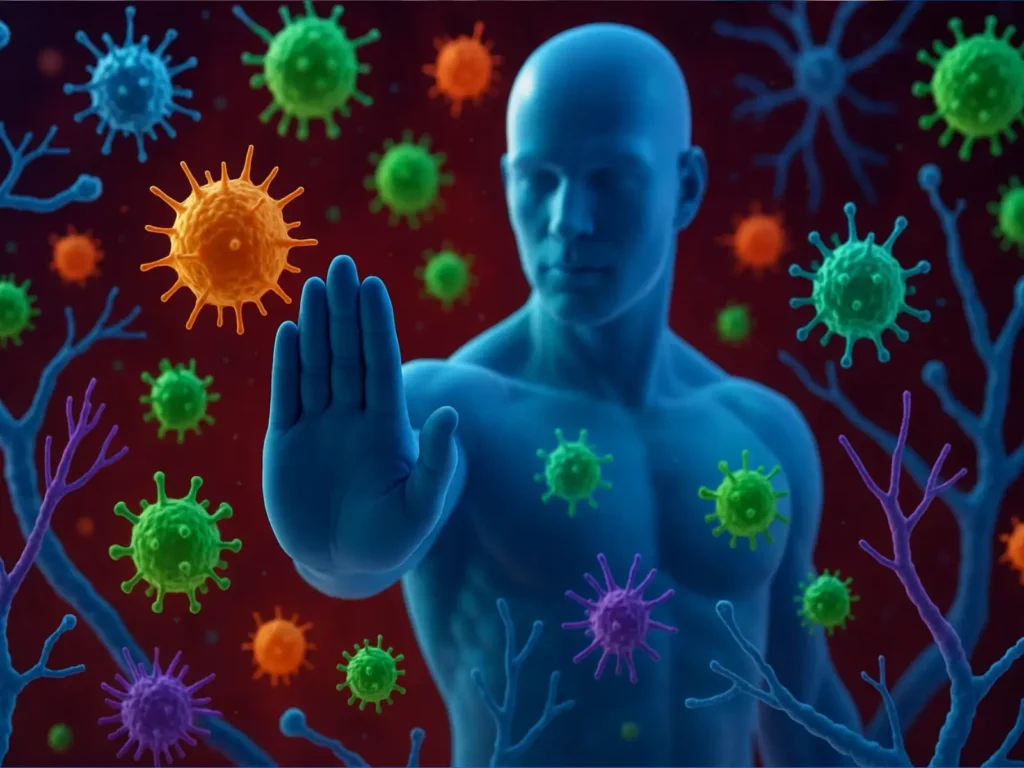
The immune system maintains balance in the body through a highly coordinated network of cells, receptors, and signaling molecules. When this system becomes dysregulated, it can lead to infections, chronic inflammation, or autoimmune disorders. Effective immune support and anti-inflammatory regulation require precise control over immune cell activity, inflammatory signaling pathways, and mechanisms that maintain immune tolerance.
Peptide-based research compounds—known for their high specificity and strong biocompatibility—have shown significant potential in guiding immune responses. They can modulate immune cell behavior, block inflammatory signaling, and restore balance in the immune microenvironment, offering new possibilities for research in infectious diseases, autoimmune disorders, and chronic inflammatory conditions.
Core Application Areas
1. Immune Regulation: Balancing Immune Cell Activity
Peptide compounds support both the activation and suppression of immune responses, helping maintain healthy immune equilibrium.
- Targeted T-cell modulation: Peptides such as Thymosin Alpha-1 enhance the maturation and function of T cells. By improving communication between helper T cells (CD4⁺) and cytotoxic T cells (CD8⁺), these peptides boost the body’s ability to recognize and eliminate pathogens or abnormal cells. This makes them valuable for supporting immune function in weakened or compromised immune states.
- Induction of regulatory T cells (Tregs): Certain peptides promote the expansion of Tregs, which help suppress overactive immune responses. By maintaining immune tolerance, they play a critical role in autoimmune disease research and organ transplant studies.
- Support of innate immune defenses: Antimicrobial peptides (AMPs) such as LL-37 not only exhibit broad antimicrobial properties but also enhance the function of dendritic cells and macrophages. They strengthen barrier immunity in the skin and mucosal tissues while promoting efficient antigen presentation and T-cell activation.
2. Anti-inflammation: Targeting Key Points in the Inflammatory Cascade
Peptide compounds can help control inflammation through multiple complementary mechanisms.
- Inhibition of the NF-κB pathway: Peptides such as BPC-157 are known for their ability to suppress NF-κB activity, reducing the release of pro-inflammatory cytokines and relieving tissue swelling. At the same time, they help support gene expression related to tissue repair, offering dual benefits in inflammatory environments.
- Kininogen-derived peptides for local inflammation: Peptides like KPV regulate neutrophil behavior and reduce oxidative stress, limiting unnecessary inflammation at the site of injury. Their effects support research in conditions involving inflammation-related tissue damage.
- Mitochondrial and oxidative stress protection: Mitochondria-targeted peptides such as SS-31 help protect mitochondrial structures, decrease excessive ROS production, and limit activation of apoptosis pathways. These actions are valuable in research involving oxidative stress-related tissue damage.
3. Autoimmune Support: Restoring Immune Tolerance
Autoimmune diseases arise when the immune system mistakenly targets the body’s own tissues. Peptide compounds show promise in supporting mechanisms that restore tolerance.
- Inducing antigen-specific tolerance: Short peptides derived from self-antigen sequences can interact with antigen-presenting cells to reduce autoantibody generation and suppress tissue-targeting T-cell activity. This precision makes them a useful research tool in disorders such as rheumatoid arthritis and lupus.
- Balancing the cytokine environment: Some peptides help regulate T-helper cell differentiation (Th1/Th2/Th17) and adjust the secretion of pro- and anti-inflammatory cytokines. This contributes to reduced chronic inflammation and better immune stability.
Conclusion
Peptide compounds play an increasingly important role in immune and anti-inflammatory research due to their high specificity and multi-pathway regulatory capabilities. By influencing T-cell differentiation, inflammatory signaling, and immune tolerance mechanisms, they support both protective immune activity and the prevention of excessive immune-driven tissue damage. Their diverse mechanisms offer promising research applications across infectious diseases, autoimmune disorders, chronic inflammation, and immune dysregulation.
Important Notice
All articles and product information on this website are provided solely for educational and informational purposes.
Products offered on this website are intended strictly for in vitro research use only.
- These products are not medications.
- They have not been evaluated or approved by the U.S. FDA.
- They are not intended to diagnose, treat, cure, or prevent any disease.
- It is strictly prohibited to use, administer, or introduce these products into humans or animals in any form.