Comparisons
Klow vs Glow: What's the Difference?
By NUPEPS11 octobre 2026
Klow and Glow at a glance
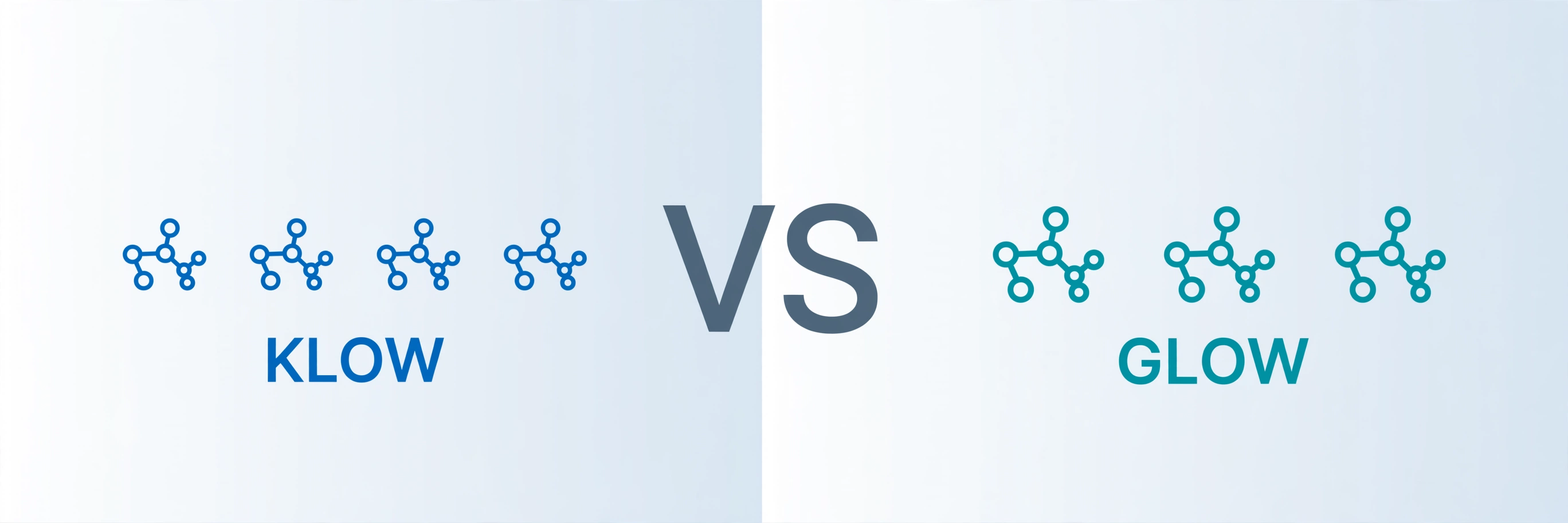
Peptide research blends package several well-studied compounds into a single vial, and two of the most discussed combinations are Klow et Glow. Both are built around a shared core of three peptides — GHK-Cu, BPC-157, and TB-500 — and both are intended strictly for laboratory research use.
The headline differences are simple. Klow adds a fourth peptide, KPV, to the shared three-peptide core and is supplied at 80 mg total per vial. Glow contains the three-peptide core without KPV and is supplied at 70 mg total per vial. Everything else in this comparison follows from those two facts.
Ingredient-by-ingredient comparison
GHK-Cu
GHK-Cu is a naturally occurring copper-binding tripeptide (glycyl-L-histidyl-L-lysine complexed with copper) that appears in human plasma and has been studied for decades in dermatological and wound-healing research models. It is present in both Klow and Glow, forming part of the shared foundation of the two blends.
BPC-157
BPC-157 is a synthetic pentadecapeptide derived from a sequence found in human gastric juice. In the preclinical literature it is studied in models of tissue repair and gastrointestinal research. Like GHK-Cu, it is included in both blends.
TB-500
TB-500 is a synthetic fragment of thymosin beta-4, a protein involved in cell-migration and cytoskeletal research. It completes the shared three-peptide core found in both Klow and Glow.
KPV — the Klow-only ingredient
KPV (lysine-proline-valine) is a tripeptide fragment related to alpha-melanocyte-stimulating hormone. In the research literature it is studied in inflammation-related models. It is the single compositional difference between the two blends: Klow includes it, and Glow does not.
The KPV difference
Because three of the four peptides in Klow are identical to the three peptides in Glow, the practical question for researchers is what the addition of KPV changes about a study design.
- Complexity: Klow introduces a fourth variable into any experimental model, which can make it harder to attribute observed outcomes to a single compound. Glow's simpler three-peptide profile may be preferable when researchers want fewer confounding factors.
- Inflammation models: KPV's appearance in the literature centers on inflammation-related pathways, so researchers specifically interested in that area may prefer the four-peptide blend.
- Comparability: Results from Glow can be more directly compared with studies of its individual components, while Klow's results reflect the combined profile of four compounds.
Neither blend is better in any absolute sense — the right choice depends on the research question being asked.
Purity and COA notes
With multi-peptide blends, analytical verification matters more than with single compounds, because each additional peptide is another potential source of impurities or synthesis byproducts. Researchers should look for:
- A certificate of analysis (COA) from an independent third-party laboratory for every batch.
- HPLC purity data reported per peptide, not just as a blended average.
- Mass spectrometry confirmation of each peptide's identity and molecular weight.
- Clear labeling of the total fill weight per vial (80 mg for Klow, 70 mg for Glow) and the composition of the blend.
NUPEPS publishes third-party COAs for its research compounds, and researchers are encouraged to review them before designing any study.
Questions fréquentes
What is the main difference between Klow and Glow?
Klow contains four peptides (GHK-Cu, BPC-157, TB-500, and KPV) at 80 mg per vial; Glow contains three (GHK-Cu, BPC-157, and TB-500) at 70 mg per vial. KPV is the only ingredient difference.
Can the two blends be compared in the same study?
That is a study-design decision for the researcher. Because Glow's composition is a subset of Klow's, the two are sometimes compared directly, but experimental controls should account for the total peptide load difference (80 mg vs 70 mg).
Are these products for human use?
No. They are sold strictly as research chemicals for laboratory and analytical use only, and are not intended for human or veterinary use.
Where can I verify purity?
Check the third-party certificate of analysis for the specific batch, which reports HPLC purity and mass spectrometry identity data.
The bottom line
Klow and Glow share the same three-peptide research core — GHK-Cu, BPC-157, and TB-500 — and differ only in Klow's addition of KPV (and the corresponding 80 mg vs 70 mg fill). Researchers prioritizing a simpler, more easily interpreted profile may lean toward Glow; those whose models specifically involve KPV-related pathways may prefer Klow. Whichever blend is selected, batch-level COA verification remains the foundation of credible peptide research.
This article is for research and educational purposes only. All products discussed are research chemicals not intended for human or veterinary use. No medical claims or usage guidance are made or implied.
Questions fréquentes
Klow vs Glow: What's the Difference? est-il destiné à un usage humain ?
No. All compounds discussed in this guide are strictly for laboratory research use only. Not for human or veterinary use.
Where can I find the Certificate of Analysis?
Certificates of Analysis are available in our COA library. Each batch is third-party tested for purity and identity.
How should research compounds be stored?
Store according to the vial label instructions. Generally, lyophilized compounds should be kept in a cool, dry place away from light. Refer to the specific product documentation for details.
Tous les produits sont strictement destinés à la recherche en laboratoire et à une utilisation in vitro uniquement. Pas destiné à la consommation humaine ou vétérinaire, ni à un usage diagnostique ou thérapeutique. Les produits ne sont pas des médicaments, des aliments, des cosmétiques ou des compléments alimentaires et ne peuvent pas être mal étiquetés, mal utilisés ou étiquetés.